What Makes Disc Granulation the Preferred Method in Mineral Fertilizer Production?

Mineral fertilizer manufacturing relies on advanced granulation processes to convert fine mineral powders into uniform, durable, and easily handled granules. The use of rock-based raw materials such as phosphate ore, potash, dolomite, limestone, and gypsum requires precise control over particle size, moisture, and density. Among all existing granulating methods, the disc granulation process stands out for its high efficiency, flexible operation, and adaptability to various mineral fertilizer formulations. The following analysis explores why this method achieves such wide acceptance in modern mineral fertilizer production and how industries benefit from it.


Raw Materials in Mineral Fertilizer Production: How Do Different Minerals Support Industrial Needs?

Mineral fertilizers use a broad range of mined raw materials, and each mineral brings distinct value to the final product. For instance, rock phosphate serves as a primary phosphorus source in phosphate fertilizer production, while potash ore contributes potassium for NPK formulations. Dolomite and limestone supply calcium and magnesium, improving soil conditioning and neutralizing acidity in certain industrial fertilizer compositions. Gypsum and sulfur minerals support sulfur-based fertilizer preparations that cater to specific nutrient demands in high-value crops or industrial soil restoration projects.

Chemical, mining, and environmental industries rely on these mineral resources not only for agricultural purposes but also for waste management and mineral recycling programs. For example, mine waste management projects often use mineral granulation technologies to stabilize waste particles and reduce environmental risks. Therefore, raw material diversity demands a flexible and reliable granulation process that can handle different densities, moisture levels, and mineral hardness levels.

Disc Pelletizer for Mineral Fertilizer Production

Why Do Manufacturers Prefer Disc Granulators for Mineral Fertilizer Granulation?

In mineral fertilizer manufacturing, disc granulators—also known as pan pelletizers or pan granulators—offer superior control over granule size and shape. This equipment allows the operator to adjust the disc angle, rotational speed, and moisture addition, resulting in consistent particle formation. When dealing with minerals such as phosphate rock or potash ore, granule uniformity plays a critical role in product strength and storage stability.

The open structure of the disc granulation machine simplifies monitoring and adjustment during operation, reducing waste and improving yield. Compared with drum granulation or spray granulating methods, the disc granulation process uses a simpler design, requires less energy, and minimizes coating material losses. Moreover, the disc granulator’s ability to handle fine mineral powders without extensive pre-treatment enhances production efficiency in large-scale fertilizer manufacturing lines. The granulation process also supports continuous operation, which benefits mineral-based fertilizer producers seeking stable throughput.


What Equipment Supports the Complete Mineral Fertilizer Granulation Process?

A complete mineral fertilizer production system usually includes several types of machinery to ensure efficient processing. Before granulation, a jaw rock crusher or ore fertilizer crusher machine breaks down large mineral chunks into fine powders suitable for pelletizing. In some production plans, a Raymond mill offers precise grinding for limestone or dolomite powder preparation. After granulation, a rotary screening machine or vibrating screen separates qualified granules from oversized or undersized particles, which return to the disc granulator for further processing.

These integrated systems form the foundation of various industrial fertilizer production schemes, such as limestone fertilizer production solutions, rock phosphate fertilizer production, and mineral organic fertilizer production lines. Each process benefits from the flexibility and efficiency of disc granulation, which adapts easily to changes in raw mineral composition.


Conclusion

Disc granulation provides stable, low-cost, and controllable granule formation for industries that depend on mineral-based fertilizers. Its design meets the demands of rock, ore, and mineral powder processing, ensuring consistent particle size and improved product performance. When combined with auxiliary equipment such as crushing machines, screening units, and drying systems, the disc granulation line forms a compact and efficient mineral fertilizer manufacturing solution.

For manufacturers seeking reliable production technology and durable machinery, a professional fertilizer equipment manufacturer—Yushunxin—offers advanced disc granulators, complete mineral fertilizer production lines, and customized engineering support. By adopting such technology, enterprises strengthen their competitiveness in the continuously evolving mineral fertilizer industry. You can visit: https://www.mineralfertilizerproductionsolutions.com/product/disc-granulator-machine/
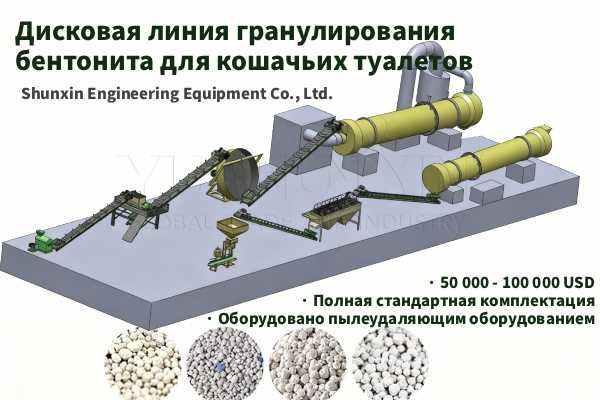
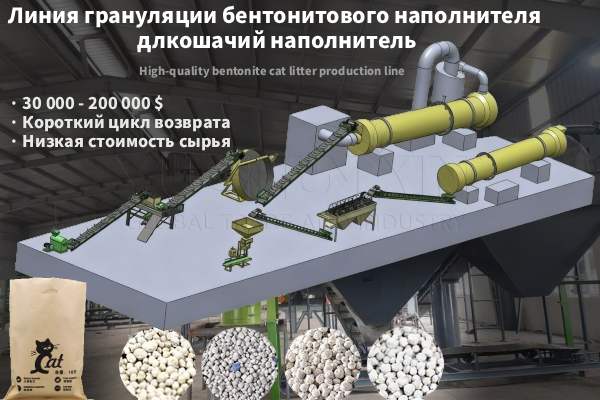
Линия по гранулированию бентонитового наполнителя для кошачьих туалетов — двойная выгода для здоровья питомцев и экологичного производства

В последние годы, с ростом уровня жизни, рынок товаров для домашних животных активно развивается, а спрос на наполнитель для кошачьих туалетов стремительно увеличивается. Бентонитовый наполнитель благодаря отличной впитывающей способности, устранению запаха и образованию комков стал первым выбором многих владельцев кошек. Задумывались ли вы, как эти, казалось бы, обычные гранулы производятся массово, эффективно и безопасно? Ответ кроется в современной линии по гранулированию бентонитового наполнителя.

Дисковая-линия-гранулирования-бентонитовый-наполнитель-для-кошачьего-туалета

1. Преимущества бентонитового наполнителя

Бентонит — это натуральный глинистый минерал, который после специальной обработки обладает:

  • Отличной впитывающей способностью, быстро удерживает жидкость и предотвращает распространение запаха.
  • Превосходным комкующим эффектом, что облегчает уборку.
  • Натуральным и безопасным составом, снижая риски для здоровья кошек.

2. Технологический процесс линии по гранулированию бентонитового наполнителя

1. Предварительная обработка сырья
Выбранный качественный бентонит дробится до мелкой пыли, затем просеивается для удаления примесей и крупных частиц, что обеспечивает качество дальнейшей грануляции.

2. Смешивание и увлажнение
Порошкообразный бентонит смешивается с необходимым количеством воды в смесителе до достижения оптимальной влажности для образования гранул.

3. Гранулирование
Увлажнённый бентонит поступает в гранулятор (например, дисковый или барабанный), где под действием вращения формируются равномерные гранулы.

4. Сушка и охлаждение
Свежие гранулы содержат много влаги, поэтому их сушат в сушильных установках, а затем охлаждают, чтобы избежать слипания.

5. Просеивание и возврат
Готовые гранулы проходят через вибросито для отделения слишком больших или мелких частиц. Стандартные гранулы направляются на упаковку, остальные возвращаются на повторную переработку.

6. Автоматическая фасовка
Финальный наполнитель автоматически взвешивается, расфасовывается и герметично упаковывается, что обеспечивает чистоту и удобство хранения и транспортировки.

Bentonite-cat-litter-production-line

3. Автоматизация и экологичность

Современные линии по гранулированию оснащены системой автоматического управления PLC, что позволяет интеллектуально контролировать процесс производства и минимизировать ошибки и затраты на рабочую силу. Установлены системы очистки воздуха и фильтрации для защиты окружающей среды и здоровья сотрудников, поддерживая идею устойчивого развития.

4. Почему стоит выбрать профессионального производителя оборудования?

  • Отработанные технологии: Богатый опыт в отрасли гарантирует стабильное качество продукции.
  • Энергоэффективность и высокая производительность: Оборудование с низким потреблением энергии и высокой производительностью помогает снизить издержки.
  • Индивидуальный подход: Возможность проектирования линии исходя из потребностей клиента.
  • Полный сервис: Пусконаладка, обучение персонала, техническое обслуживание и поддержка.

Линия по гранулированию бентонитового наполнителя не только обеспечивает комфорт и чистоту в домах любителей кошек, но и способствует экологичному развитию индустрии товаров для животных. Эффективное и экологичное оборудование — залог успешного развития предприятия. Приглашаем к сотрудничеству всех заинтересованных! Свяжитесь с нами для получения подробных схем, консультаций и организации визита на производство. Более подробную информацию можно найти на сайте:https://www.sxmashina.com/proizvodstvo-bentonitovykh-napolniteley-dlya-koshachikh-tualetov/

What Are the Trends in Disc Granulator Technology for Mineral Fertilizer Production?

The manufacturing of mineral fertilizers increasingly depends on advanced granulation equipment. In modern mineral fertilizer production, a disc granulator—or pan granulation machine—plays a vital role in transforming fine mineral powders into uniform, durable granules. This process supports stable particle size, high product strength, and efficient nutrient distribution. As mineral resources such as phosphate rock, potassium ore, and limestone become more diverse in use, industries seek better mineral processing machinery to ensure consistent quality and environmentally friendly production.


What Types of Raw Mineral Materials Are Suitable for Granulation and How Do They Benefit Different Industries?

The mineral fertilizer sector utilizes multiple raw materials mined or processed from natural deposits. Common examples include rock phosphate, limestone, dolomite, gypsum, and potassium chloride. Each mineral offers different properties and industrial advantages.

For example, rock phosphate supports phosphorus-based fertilizer manufacturing and also contributes to phosphate mine waste management. Limestone serves as a calcium source and aids in pH regulation during fertilizer production procedures. Gypsum improves soil structure and provides sulfur, while dolomite supplies magnesium for plant nutrition and industrial chemical processes. In addition, potassium ore provides essential nutrients for compound fertilizers and supports industries producing NPK granules.

Each mineral industry requires specific granule strength, moisture control, and particle uniformity in its fertilizers. Therefore, producers rely on precise disc granulation machines that can handle fine mineral powders and transform them into strong, spherical particles suitable for bulk handling and transport.

Disc Pelletizer for Mineral Fertilizer Production

How Do Disc Granulators and Related Equipment Improve the Mineral Fertilizer Manufacturing Process?

Mineral fertilizer production often involves several interconnected machines: an ore fertilizer crusher machine for particle size reduction, a disc or pan granulator for precise pelletizing, and a screening machine for separating qualified granules from fine powder.

The disc granulator operates with a rotating inclined pan that continuously mixes and granulates mineral materials under controlled moisture and speed conditions. This continuous granulating process produces uniform pellets that meet industry specifications. When combined with pre-crushing equipment such as a jaw rock crusher or fine grinding mill, the granulation process achieves optimal raw material preparation.

In advanced production lines—such as rock phosphate fertilizer production, limestone fertilizer production, or bulk fertilizer blending plants—manufacturers integrate granulation machinery with drying and cooling systems to maintain particle stability. The entire production solution thus ensures higher yield, reduced dust, and improved granule quality.


What Are the Latest Trends in Disc Granulator Technology for Mineral Fertilizer Plants?

Recent technological progress emphasizes automation, energy efficiency, and material adaptability in disc granulation systems. Manufacturers design granulators with optimized pan angles, adjustable rotation speeds, and intelligent control systems to ensure consistent particle formation. In addition, innovations in liner materials and corrosion-resistant coatings enhance durability when processing abrasive mineral feedstocks such as phosphate rock or potassium ore.

Another emerging trend is the integration of monitoring sensors that track moisture, granule size, and output uniformity in real time. This information supports data-driven optimization, reducing production waste and operational costs. Furthermore, in mineral organic fertilizer production lines, hybrid granulation systems combine mechanical pelletizing with chemical reactions to improve nutrient availability and product performance.

These developments reflect the growing demand for flexible disc granulator machinery capable of adapting to different ore-based fertilizer formulations and complex production environments.


Conclusion

Modern mineral fertilizer manufacturing depends on reliable and advanced granulation equipment. From raw material grinding to final pellet screening, each stage requires precision engineering and stable process control. Trends in disc granulator technology reveal a shift toward intelligent, durable, and energy-efficient designs that suit diverse mineral materials such as rock, ore, and mine by-products.

Producers seeking efficient mineral fertilizer production solutions can benefit from integrated systems combining disc granulators, crushers, and screening machines. A professional fertilizer equipment manufacturer—Yushunxin—continues to provide innovative disc granulation technology and complete mineral fertilizer production lines, supporting sustainable and efficient industrial fertilizer manufacturing worldwide. You can visit: https://www.mineralfertilizerproductionsolutions.com/product/disc-granulator-machine/

How Does Disc Granulating Machinery Enhance the Quality of Mineral Fertilizer Pellets?

In modern mineral fertilizer production, the stability, uniformity, and mechanical strength of pellets determine end-product value and market competitiveness. The granulation stage transforms mineral powders with uneven particle sizes into durable, transportable, and easily applicable pellets. Among various granulating technologies, disc granulating machinery plays a central role due to its controllable process parameters and stable output quality. The equipment enables consistent particle formation from mineral raw materials such as rock phosphate, potash ore, dolomite, and limestone. To understand how disc granulators enhance pellet quality, it is necessary to examine suitable raw materials, related production processes, and the technical design of the machinery.


1. What Raw Materials Are Suitable for Mineral Fertilizer Granulation?

Mineral fertilizer manufacturing often relies on raw materials derived from mines and rock deposits. Common materials include phosphate rock, potash ore, dolomite, limestone, and gypsum. Each mineral type requires specific preparation before entering the granulating procedure. For example, in rock phosphate fertilizer production, the raw ore usually passes through a crushing machine such as a jaw rock crusher or ore fertilizer crusher machine to achieve fine powder consistency. This step ensures uniform feeding into the granulator.

In limestone fertilizer production solutions, ground limestone particles contribute calcium and magnesium nutrients, but they must maintain consistent moisture and particle distribution to support efficient pellet formation. Similarly, potash ore and dolomite supply essential minerals for soil conditioning and industrial fertilizer blending, such as in NPK fertilizer manufacturing or mineral organic fertilizer production lines. Therefore, the quality of raw material preparation directly affects the subsequent granulation process, influencing both the density and hardness of the final pellets. Proper selection and preparation of mineral feedstock ensure compatibility with disc granulating machinery and other auxiliary equipment.

Disc Pelletizer for Mineral Fertilizer Production

2. How Does Disc Granulating Machinery Improve Pellet Uniformity and Strength?

Disc granulators, also known as pan granulators or disc pelletizers, enhance mineral fertilizer pellet formation through precise control of material layering and moisture. The granulating disc rotates at an adjustable speed while maintaining a specific inclination angle. As mineral particles roll along the rotating pan, they gradually agglomerate into uniform granules under continuous layering and liquid binding. This process allows better control of pellet diameter and surface hardness compared with conventional drum-type granulators.

During granulation, mineral powders such as fine rock dust or ore residue are continuously fed through a regulated system. The controlled spray water or binder addition promotes stable adhesion between particles, forming a compact granule with balanced strength. The disc granulating machine reduces material segregation and minimizes dust loss during operation, thereby improving production efficiency. The rotary design ensures that each layer receives equal rolling time, producing spherical pellets with consistent density. Moreover, the open structure allows operators to monitor the pelletizing process directly, ensuring quick adjustment of moisture or feed rate for stable pellet quality.


3. How Do Supporting Machines Optimize the Mineral Fertilizer Production Line?

Beyond the granulator itself, mineral fertilizer manufacturing requires a coordinated set of processing machines. Before granulation, ore crushing machines and grinding mills (such as a Raymond mill) prepare fine mineral powders. After pellet formation, a screening machine separates qualified pellets from oversized or undersized particles. Oversized granules can return to the pan granulator for reprocessing, ensuring minimal raw material waste.

In large-scale bulk fertilizer blending plants and mine waste management systems, disc granulating machinery operates alongside conveyors, dryers, and coolers to stabilize moisture and temperature of the pellets. The integration of these machines guarantees a balanced production line that enhances productivity and maintains consistent quality control. The result is a uniform mineral fertilizer pellet series suitable for industrial packaging, transportation, and long-term storage.


Conclusion

The production of mineral fertilizer pellets depends on careful raw material selection, precise granulation control, and coordinated equipment operation. Disc granulating machinery ensures uniform pellet size, improved mechanical strength, and high production reliability. As the demand for high-quality mineral-based fertilizers continues to expand in both agricultural and industrial applications, producers require machinery that supports continuous operation and consistent output standards.

A professional fertilizer equipment manufacturer—Yushunxin—provides advanced disc granulators, ore fertilizer crushers, and screening machines designed to improve mineral fertilizer granulation performance. Through optimized machinery design and reliable technical support, such equipment enhances mineral pellet quality, supports sustainable fertilizer manufacturing, and promotes efficient utilization of valuable rock and ore resources. You can visit: https://www.mineralfertilizerproductionsolutions.com/product/disc-granulator-machine/

Дисковый гранулятор: экономичный выбор для малых и средних производств удобрений!

На рынке оборудования для гранулирования удобрений роторные барабанные грануляторы и экструзионные грануляторы часто вызывают жаркие споры. Однако для малых и средних фермерских хозяйств и заводов по производству удобрений дисковые грануляторы — настоящая находка. Они не только просты в эксплуатации и экономичны, но и стабильно производят высококачественные гранулированные удобрения, что делает их идеальным выбором для большинства малых и средних производственных предприятий. Сегодня мы подробно рассмотрим дисковые грануляторы и выясним, почему они стали предпочтительным выбором для многих производителей.

Российский-заказчик-приобрел-два-тарельчатых-гранулятора для-производство-бентонитового-наполнителя

Почему дисковые грануляторы так популярны среди малых и средних производителей? Три основных преимущества незаменимы.

  1. Низкая стоимость и низкий порог входа, что делает их простыми в использовании даже для новичков.

По сравнению с экструзионными грануляторами, требующими систем высокого давления, и роторными барабанными грануляторами, занимающими большую площадь, стоимость тарельчатых грануляторов составляет всего 60–70% от стоимости роторных барабанных грануляторов той же производительности и не требует сложного вспомогательного оборудования (например, больших сушилок). Эксплуатация ещё более проста. Простая регулировка наклона диска (обычно 15–25°) и скорости вращения (15–30 об/мин) позволяет новичку освоить процесс всего за 1–2 дня, избавляя от необходимости тратить время и средства на профессиональное обучение.

  1. Высокая округлость гранул, стабильное качество и высокая конкурентоспособность на рынке

Тарельчатый гранулятор производит гранулы методом «вальцовой агломерации» внутри диска. Получаемые гранулы имеют округлость более 90% и однородный размер (обычно регулируемый в диапазоне 2–5 мм). По внешнему виду они значительно превосходят гранулы неправильной формы, получаемые при обычной экструзионной грануляции. Для производителей удобрений, ориентированных на розничные рынки, эти привлекательные гранулы повышают узнаваемость продукта и могут даже предлагать наценку 5–10% по сравнению с аналогичными продуктами. Кроме того, умеренная твёрдость гранул (степень разрушения ≤3%) облегчает транспортировку, обеспечивая медленное высвобождение питательных веществ, что идеально подходит для роста растений.

  1. Широкая адаптируемость и низкое энергопотребление: отсутствие шероховатостей, экономия средств

Дисковый гранулятор легко справляется с любыми видами удобрений: органическими, сложными удобрениями или трудногранулируемыми материалами с высокой влажностью (например, навозными смесями и гуминовыми удобрениями), устраняя необходимость в частой смене пресс-форм или корректировке технологического процесса. Он также обеспечивает существенную экономию энергии — его удельное энергопотребление составляет всего 50% от энергопотребления экструзионного гранулятора и 70% от энергопотребления барабанного гранулятора. При ежедневном производстве 10 тонн гранулированных удобрений это позволяет сэкономить 3000–5000 юаней на оплате электроэнергии в месяц, что является значительной экономией для производителей в долгосрочной перспективе.

Тарельчатый гранулятор с несколькими углами

II. Как использовать дисковый гранулятор? 4 практических совета по повышению эффективности производства

  1. Контроль влажности материала — ключ к успешной грануляции

Чрезмерно высокая влажность материала может легко привести к комкованию гранул, а слишком низкая затрудняет грануляцию. Обычно влажность при гранулировании органических удобрений следует контролировать в пределах от 25% до 35%, а для сложных удобрений — от 12% до 18%. Если влажность не соответствует желаемой, отрегулируйте влажность материала, просушив его на солнце (для органических удобрений) или слегка сбрызнув водой (для сложных удобрений), чтобы материал удерживался в комковатом состоянии и легко распадался при легком сжатии.

  1. Правильно отрегулируйте угол наклона и скорость вращения, чтобы избежать образования «слишком мелких частиц» или «отсутствия гранул».

Если частицы слишком мелкие, увеличьте угол наклона диска (каждое увеличение на 1–2° ускоряет агломерацию гранул) или уменьшите скорость вращения, чтобы увеличить время пребывания материала в диске.

Если гранулы не образуются, уменьшите угол наклона и увеличьте скорость вращения, чтобы усилить эффект перемешивания при перемешивании. Рекомендуется установить угол наклона 20° и скорость вращения 20 об/мин для первоначального запуска, затем отрегулировать настройки в зависимости от образования гранул.

  1. Регулярно проверяйте расходные детали, чтобы продлить срок службы оборудования.

Основными расходными деталями дискового гранулятора являются футеровка диска (обычно изготовленная из износостойкой резины или высокохромистого чугуна) и защитная кромка. Рекомендуется проводить еженедельные проверки. Если на внутренней футеровке имеются признаки локального износа, немедленно отремонтируйте ее с помощью износостойких заплат. Деформированные перегородки следует своевременно ремонтировать или заменять, чтобы предотвратить утечку материала через край диска и снижение эффективности грануляции.

  1. Используйте простую просеивающую машину для уменьшения отходов сырья

В процессе грануляции неизбежно образуется небольшое количество слишком мелкого порошка (обычно 2–5%). Рекомендуется использовать небольшое вибросито на выходе тарельчатого гранулятора для отсеивания мелкого порошка и его возврата на тарельчатый гранулятор для вторичной грануляции. Это может повысить степень использования сырья до более чем 98%, сократив отходы и снизив производственные затраты.

III. Для каких целей подходит тарельчатый гранулятор? Ознакомьтесь с этим, прежде чем принять решение, чтобы избежать ошибок.

  1. Лучший выбор для малых и средних производителей

Если ваш годовой объём производства составляет менее 100 000 тонн (например, семейные фермы, сельские мастерские по производству удобрений или небольшие заводы по производству удобрений), производительность дискового гранулятора (обычно 1–15 тонн/час) полностью удовлетворит ваши потребности. Он не требует большой площади (для одного агрегата требуется всего 10–20 квадратных метров) и отличается гибкостью монтажа.

  1. Незаменимая вещь для производителей, специализирующихся на высококачественных гранулированных удобрениях

Если вы производите удобрения преимущественно для розничной продажи или стремитесь выйти на рынок высококачественных посадочных материалов (например, для выращивания фруктов, овощей или цветов), гранулы высокой округлой формы, получаемые дисковым гранулятором, помогут вам выделить свой продукт на фоне конкурентов и быстро выйти на рынок.

  1. Лучший выбор для производителей с ограниченным бюджетом, желающих контролировать расходы

Для начинающих производителей удобрений или фермеров с ограниченным бюджетом низкая стоимость, низкое энергопотребление и простота обслуживания дискового гранулятора могут значительно снизить риски запуска и эксплуатационные расходы, обеспечивая более стабильное производство.

Вывод: Выбор правильного оборудования упрощает производство удобрений

Дисковый гранулятор не обладает высокой производительностью барабанного гранулятора и прочностью экструзионного, но его экономичность, простота эксплуатации и стабильное качество делают его оптимальным решением для малых и средних предприятий по производству удобрений. Если вы затрудняетесь с выбором оборудования для грануляции, рассмотрите дисковый гранулятор — он, возможно, и не гарантирует мгновенного успеха, но, безусловно, поможет вам уверенно двигаться вперед и избежать ошибок на пути к производству удобрений.

Если вам нужен расчет стоимости дискового гранулятора с определенной производительностью или индивидуальный план производства с учетом характеристик материала, оставьте комментарий в разделе комментариев, и мы предоставим вам персональную профессиональную консультацию! Подробнее на сайте:https://www.sxmashina.com/tarelchatyy-granulyator/

How Does Pan Granulation Equipment Benefit Limestone Fertilizer Production Solutions?

In modern mineral fertilizer manufacturing, the choice of granulation equipment greatly affects the efficiency and quality of the final product. Among various mineral fertilizer production lines, limestone fertilizer granule making remains a critical sector, and pan granulation machines play a central role. This article explores how pan granulation equipment enhances limestone fertilizer production and compares its advantages for diverse mineral fertilizer solutions.

What Types of Raw Materials Suit Mineral Fertilizer Production Lines?

Mineral fertilizer manufacturing utilizes a wide range of raw materials sourced from rocks, ores, and mines. For instance, limestone, phosphorite ore, dolomite, gypsum, potassium rock, and zeolite minerals serve as main feedstocks in different fertilizer granulation procedures. In the limestone fertilizer production solution, manufacturers generally use ground limestone or calcined lime as the main mineral component. Similarly, rock phosphate powder serves as the core raw material in the production of phosphate-based fertilizers.

Each mineral raw material presents unique process demands. Limestone, with high calcium content, improves soil pH and structure in various applications. Rock phosphate offers essential phosphorus supply for nutrient blends. In mine waste management, granulation transforms industrial by-products into stable, valuable fertilizer pellets, enhancing environmental protection. Besides, mineral organic fertilizer production lines often combine mined minerals with organic matter, requiring reliable granulation to ensure consistent particle size and nutrient content.

Disc Pelletizer for Mineral Fertilizer Production

How Do Pan Granulators Support Efficient Granulation in Mineral Fertilizer Manufacturing?

Disc granulation equipment, known as pan pelletizers and disc granulators, delivers reliable and flexible granulation solutions for mineral fertilizer production. Pan granulators can handle a diverse range of mineral materials, including finely milled ores, rock powders, and mineral blends. The shallow pan structure and adjustable angle of these machines enable precise control over granule size, shape, and uniformity.

During the limestone fertilizer pelletizing process, pan pelletizers excel at producing dense, round particles suitable for storage, transportation, and field application. The disc granulation machine features a simple layout, robust construction, and easy adjustment of water content, making it ideal for various mineral fertilizer production lines such as rock phosphate fertilizer production or BB fertilizer blending plants. High operational efficiency and low energy consumption further improve the cost-effectiveness of mineral granulation procedures.

What Key Features Distinguish Pan Granulation Machines in Mineral Granule Manufacturing?

Several features differentiate pan granulators from other fertilizer granulating equipment. Their open design allows operators to monitor granule formation and make real-time process adjustments. The rotating disc and scrapers facilitate continuous mixing and balling of mineral particles, which increases granulation yield and minimizes material waste. Additionally, pan granulation equipment enables easy integration with other mineral fertilizer processing machines, such as ore fertilizer crusher machines and rotary screening machines, to form a complete and efficient production line.

For example, in a limestone fertilizer production solution, a jaw rock crusher may first reduce raw limestone size, followed by fine milling through a raymond mill. The processed mineral powder then enters the pan granulator for pellet making. After granulation, a rotary screening machine separates qualified limestone fertilizer granules from oversized or undersized particles, ensuring product uniformity.

How Can Mineral Fertilizer Producers Optimize Production with Advanced Granulation Equipment?

Selecting the right granulation machinery is crucial for producers aiming to optimize mineral fertilizer manufacturing. Pan granulators offer significant benefits in terms of flexibility, precision, and scalability for various mineral materials. Their compatibility with other ore and rock processing equipment ensures seamless process flow, while their simple maintenance and operation minimize downtime. In comparison to rotary drum granulators or extrusion pelletizers, disc and pan granulators often provide better control over mineral granule shape and size, especially for limestone, phosphate, and blended mineral fertilizer products.

Conclusion

In summary, pan granulation equipment enables fertilizer manufacturers to efficiently transform rocks, minerals, and ores into high-quality granular products. The adaptable design of disc granulators supports a wide spectrum of mineral fertilizer production lines, from limestone fertilizer manufacturing to mine waste management and rock phosphate granulation. For those seeking reliable and advanced granulation machinery, collaboration with a professional fertilizer equipment manufacturer, such as Yushunxin, can provide tailored solutions and ensure long-term success in the competitive mineral fertilizer market. You can visit: https://www.mineralfertilizerproductionsolutions.com/product/disc-granulator-machine/

Why Is Disc Granulation the Preferred Method in Mineral-Based Fertilizer Production?

In the realm of mineral fertilizer production, the choice of granulation method significantly impacts the efficiency and quality of the final product. Rock-based fertilizers, derived from various minerals and ores, require precise processing to transform raw materials into usable granules. Understanding why disc granulation emerges as the preferred method provides valuable insights into the manufacturing of high-quality mineral fertilizers.

What Raw Materials Are Suitable for Mineral Fertilizer Production?

Mineral fertilizers are produced from a variety of raw materials extracted from mines and quarries. Common examples include rock phosphate for phosphorus fertilizers, potash ores for potassium fertilizers, and limestone for calcium-rich fertilizers. Additionally, minerals like gypsum and sulfur are utilized for their nutrient content. Each mineral requires specific processing to unlock its full agricultural potential. For instance, rock phosphate needs to be finely ground and granulated to enhance its solubility, making it more accessible to plants. Proper processing ensures that the mineral nutrients are available in forms that plants can readily absorb.

Disc Pelletizer for Mineral Fertilizer Production

How Does Disc Granulation Benefit Rock-Based Fertilizer Manufacturing?

Disc granulation, also known as pan pelletizing, offers several advantages in the manufacturing of mineral-based fertilizers. This method involves the use of a disc granulator, which rotates to agglomerate fine mineral particles into uniform granules. The control over granule size is a significant benefit, as it allows manufacturers to produce particles that meet specific standards. Granulating minerals like crushed ores or mineral powders improves their handling and application in agricultural settings. The disc granulation process enhances the physical properties of the fertilizer, reducing dust and preventing segregation of nutrients. This method increases the efficiency of nutrient delivery to plants, making it a preferred choice in the industry.

What Other Equipment Is Essential in Mineral Fertilizer Production?

Apart from granulating equipment, mineral fertilizer production relies on several other machines to process raw materials effectively. Crushing machines, such as jaw rock crushers and ore fertilizer crusher machines, are essential for reducing large rocks and ores into smaller particles suitable for granulation. Grinding mills, like the Raymond mill, further pulverize minerals like limestone to fine powders. Screening machines play a crucial role in separating granules based on size, ensuring uniformity in the final product. Each piece of machinery contributes to a streamlined production process, transforming raw minerals into high-quality fertilizer granules ready for agricultural use.

Why Choose Disc Granulation Over Other Granulating Methods?

Disc granulation stands out due to its efficiency and adaptability in handling various mineral materials. Unlike other granulating methods, the disc granulator can process a wide range of raw materials, including those with varying moisture content and particle sizes. The ability to adjust the tilt angle and rotation speed of the disc allows for precise control over the granulation process. This flexibility is particularly beneficial when working with different types of ores and minerals. The disc granulation method also offers energy efficiency and lower operational costs, making it an economically viable option for large-scale fertilizer production.

Conclusion

Disc granulation has proven to be the preferred method in mineral-based fertilizer production due to its effectiveness in processing a wide array of rock-derived materials. By utilizing equipment such as disc granulators, crushing machines, and screening machinery, manufacturers can produce high-quality fertilizer granules that meet industry standards. The process enhances the physical properties of minerals, ensuring efficient nutrient delivery and improved agricultural outcomes. For those seeking advanced solutions in mineral fertilizer manufacturing, partnering with a professional fertilizer equipment manufacturer like Yushunxin ensures access to cutting-edge machinery and expertise in the field. You can visit: https://www.mineralfertilizerproductionsolutions.com/product/disc-granulator-machine/

How Does Disc Pelletizing Improve the Processing of Rock Phosphate Fertilizers?

Rock phosphate is a vital mineral resource used extensively in the production of mineral fertilizers. Processing this mineral into effective fertilizers requires advanced machinery and efficient techniques. Understanding how disc pelletizing enhances the processing of rock phosphate fertilizers can provide significant benefits to industries involved in mineral fertilizer production.

What Raw Materials Are Suitable for Mineral Fertilizer Production?

Mineral fertilizers are produced from a variety of raw materials extracted from mines and quarries. Examples include rock phosphate, limestone, potash ore, and gypsum. Each of these minerals offers specific benefits:

  • Rock Phosphate: Rich in phosphorus, it is essential for plant root development and energy transfer.
  • Limestone: Provides calcium and magnesium, crucial for soil pH balance and plant structure.
  • Potash Ore: Supplies potassium, important for water regulation and disease resistance in plants.
  • Gypsum: Offers sulfur and improves soil structure.

Processing these minerals into fertilizers enhances their availability to plants and improves agricultural productivity.

Click here for more details.

Disc Pelletizer for Mineral Fertilizer Production

How Does Disc Pelletizing Enhance Rock Phosphate Processing?

Disc pelletizer, also known as pan granulator, involves the agglomeration of fine mineral particles into larger, uniform granules. When applied to rock phosphate:

  • Improved Granule Uniformity: Disc granulators produce consistent granule sizes, enhancing the ease of handling and application.
  • Enhanced Nutrient Availability: Granulating rock phosphate increases its surface area, improving solubility and nutrient release.
  • Dust Reduction: Pelletizing minimizes dust generation during processing and application, leading to a safer work environment.

These benefits result in more efficient fertilizer products that meet the specific needs of agricultural industries.

What Features Make Disc Granulation Machines Effective in Fertilizer Manufacturing?

Disc granulation machines are designed with specific features that optimize the pelletizing process:

  • Adjustable Disc Angle: Allows control over granule size by adjusting the tilt of the pan.
  • Efficient Moisture Control: Ensures the correct moisture content for optimal granule formation.
  • Robust Construction: Made to handle abrasive mineral materials like rock phosphate and other ores.
  • Easy Maintenance: Simplifies cleaning and reduces downtime in fertilizer production lines.

These features contribute to the effectiveness of disc pelletizers in transforming raw mineral materials into high-quality fertilizer granules.

How Do Other Mineral Fertilizer Processing Machines Complement Disc Pelletizers?

In a complete mineral fertilizer production process, several machines work in conjunction:

  • Crushing Machines: Ore fertilizer crusher machines and jaw rock crushers reduce the size of raw minerals like rock phosphate, preparing them for granulation.
  • Screening Machines: These machines separate granules by size, ensuring uniformity in the final product.
  • Raymond Mills: Used for fine grinding of minerals like limestone, enhancing their reactivity in fertilizers.

By integrating these machines, fertilizer manufacturers can create efficient production lines that handle various mineral materials effectively.

Why Choose a Professional Fertilizer Equipment Manufacturer?

Selecting equipment from a reputable manufacturer ensures quality and reliability. A professional fertilizer equipment manufacturer like Yushunxin provides:

  • Expertise in Mineral Processing Equipment: Specializing in machines for rock, mineral, and ore processing.
  • Customized Solutions: Tailored equipment to meet specific manufacturing needs.
  • After-Sales Support: Ongoing assistance to maintain optimal operation of machinery.

Partnering with an experienced manufacturer enhances the efficiency and profitability of mineral fertilizer production.

Conclusion

Disc pelletizing plays a crucial role in improving the processing of rock phosphate fertilizers by producing uniform, efficient, and easy-to-apply granules. When combined with other mineral processing machinery, it forms an integral part of a modern fertilizer production line. Investing in quality equipment from professional manufacturers like Yushunxin ensures that the fertilizer industry can meet the growing agricultural demands with high-quality mineral fertilizers. You can visit: https://www.mineralfertilizerproductionsolutions.com/product/disc-granulator-machine/

Overcoming Common Challenges in Mineral Fertilizer Production with Disc Granulator Machines

Mineral fertilizer production is essential for enhancing soil fertility and boosting crop yields. However, manufacturers often face several challenges when processing raw mineral materials into granulated fertilizers. Understanding these obstacles and employing the right equipment, such as disc granulator machine, can significantly improve production efficiency and product quality.


What Raw Materials Are Suitable for Mineral Fertilizer Production?

Mineral fertilizers are derived from various raw materials that provide essential nutrients to plants. Commonly used minerals include rock phosphate, limestone, potash ore, and mined potassium salts. Rock phosphate serves as a primary source of phosphorus, which is vital for root development. Limestone supplies calcium and magnesium, essential for soil pH regulation and plant health. Potash ore and potassium salts are key for potassium fertilizers that improve plant resistance to diseases and stress.

Different industries have specific needs based on the crops cultivated and soil conditions. For instance, rock phosphate fertilizer production is crucial for regions lacking phosphorus in the soil. Similarly, limestone fertilizer production solutions address acidic soils by neutralizing pH levels, enhancing nutrient availability.

Disc Pelletizer for Mineral Fertilizer Production

What Are the Common Challenges in Mineral Fertilizer Production?

Producing mineral fertilizer granules presents several challenges. One major issue is the variability in raw material composition, which affects the consistency and nutrient content of the final product. Processing hard mineral ores like phosphate rock or potash requires robust equipment capable of handling abrasive materials. Additionally, achieving uniform granule size is critical for efficient application and nutrient release, but it’s often difficult due to the diverse physical properties of mineral inputs.

Another challenge lies in controlling dust and waste during processing. Mineral powders can generate significant dust, posing environmental and health risks. Effective mine waste management becomes necessary to mitigate these issues. Manufacturers must also consider energy efficiency and production costs, as grinding and granulating mineral ores can be energy-intensive.


How Can Disc Granulators Help in Mineral Fertilizer Granulation?

Disc granulator machines, also known as pan pelletizers, play a pivotal role in addressing these challenges. They are specifically designed for granulating mineral powders into uniform particles. The disc’s adjustable angle and rotational speed allow precise control over granule size, ensuring consistent product quality. By converting fine mineral powders into granules, disc pelletizers reduce dust generation, improving environmental safety and worker health.

These machines are suitable for processing a variety of mineral fertilizers, including those derived from rock phosphate and limestone. The granulation process enhances the physical properties of the fertilizer, making it easier to handle, store, and apply. Disc granulators are efficient, with low energy consumption compared to other granulating equipment, which helps reduce operating costs.


What Other Mineral Fertilizer Processing Machines Are Essential?

In addition to disc granulator, other machines are vital in mineral fertilizer production lines. Crushing equipment like jaw rock crushers or ore fertilizer crusher machines is necessary for reducing large mineral rocks into smaller particles suitable for granulation. For example, processing rock phosphate requires strong crushers to break down the hard ore.

Screening machines are also important for separating granules based on size, ensuring only particles within the desired range proceed to packaging. Raymond mills may be used for fine grinding of minerals to achieve the required powder fineness before granulation. Implementing a combination of these machines enables efficient production of high-quality mineral fertilizers.


Conclusion

Addressing the common challenges in mineral fertilizer production requires a comprehensive approach that includes the right equipment and processes. Disc granulator machines offer effective solutions for granulating mineral fertilizers, improving product uniformity, and reducing dust. Coupled with crushers, mills, and screening equipment, they form an efficient production line for various mineral fertilizers.

For manufacturers seeking to enhance their mineral fertilizer production, partnering with a professional fertilizer equipment manufacturer is crucial. Yushunxin, a leading company in the industry, provides comprehensive solutions and high-quality machinery tailored to the specific needs of the mineral fertilizer sector. You can visit: https://www.mineralfertilizerproductionsolutions.com/product/disc-granulator-machine/

How to Optimize Your Mineral Fertilizer Production with Disc Granulators?

In the competitive landscape of mineral fertilizer production, optimizing the granulation process is crucial for enhancing product quality and operational efficiency. Disc granulators, also known as pan pelletizers or ball-making machines, play a pivotal role in this context. By facilitating the transformation of raw mineral materials into uniform granules, these machines are indispensable in the fertilizer manufacturing process. This blog outlines the steps to optimize your mineral fertilizer production using disc granulation equipment and highlights the suitable raw materials and machinery involved in this process.

What Raw Materials are Suitable for Mineral Fertilizer Production?

Choosing the right raw materials is fundamental to producing high-quality mineral fertilizers. Commonly utilized materials include rock phosphate, a rich source of phosphorus; potash ore, providing essential potassium; and limestone, known for its calcium content. Each of these materials serves distinct industries. For instance, rock phosphate is vital in the rock phosphate fertilizer production process, catering to industries seeking phosphorus-rich fertilizers. Similarly, potash finds its use in processes like NPK fertilizer manufacturing, offering potassium to boost crop yield. Limestone is often employed in limestone fertilizer production solutions, where calcium is needed to improve soil structure. Selecting the appropriate raw materials not only meets industry-specific needs but also maximizes the benefits of mineral fertilizers.

Disc Pelletizer for Mineral Fertilizer Production

How Do Disc Granulators Enhance Mineral Fertilizer Granulation?

Disc granulators, or pan granulation machinery, stand out in the mineral fertilizer production landscape for their efficiency and precision. These machines allow for precise control over particle size, ensuring consistent granule quality. The granulation process involves the careful addition of moisture to the raw mineral mix, which, under the rotating disc’s influence, forms uniform granules. This mechanism is crucial for maintaining quality across batches and reducing material waste. Moreover, disc granulators excel in handling various mineral materials, including ores and rocks, making them versatile in their application. The adaptability of these machines to different mineral types enhances their role in optimizing fertilizer granulation.

Different Scales of Mineral Fertilizer Pan Granulator

What Other Equipment Complements the Disc Granulation Process?

To achieve optimal results in mineral fertilizer production, integrating additional machinery is essential. An ore fertilizer crusher machine, such as a jaw rock crusher, is necessary for reducing the size of rocks and ores, preparing them for granulation. This ensures that the raw materials are of uniform size and composition, facilitating a smoother granulation process. A screening machine further complements the production line by sorting granules into different size categories, ensuring only the desired size proceeds to packaging. These machines work in unison with the disc granulators, streamlining the production process and ensuring high-quality output.

Why Choose a Professional Manufacturer Like Yushunxin?

When investing in mineral fertilizer production equipment, quality and reliability are paramount. A professional fertilizer equipment manufacturer like Yushunxin offers state-of-the-art disc granulation machines and complementary machinery tailored to the needs of the mineral fertilizer industry. Their expertise ensures that each piece of equipment seamlessly integrates into your production line, providing efficient and robust solutions. Yushunxin’s commitment to innovation and quality makes it a preferred choice for businesses looking to enhance their mineral fertilizer production processes.

Conclusion

In summary, optimizing mineral fertilizer production with disc granulators involves selecting the right raw materials, utilizing advanced granulation machinery, and integrating complementary equipment. This approach ensures high-quality granule production, meeting the diverse needs of industries reliant on mineral fertilizers. By partnering with a trusted equipment manufacturer like Yushunxin, businesses can enhance their production efficiency and product quality, staying competitive in the ever-evolving mineral fertilizer market. You can visit: https://www.mineralfertilizerproductionsolutions.com/product/disc-granulator-machine/