
If your fertilizer factory already operates a batching and mixing system, adding granulation equipment can help you enter the commercial granular fertilizer market. Instead of building an entirely new factory, you may reuse suitable existing equipment and integrate additional processing units according to your production targets.
1. Evaluate Your Existing Blending Equipment
Before upgrading, assess your current raw material storage, batching machines, mixers, conveyors, and control system. Check their processing capacity, material compatibility, and automation level.
A well-planned blended fertilizer granules production line can retain suitable existing equipment while adding the necessary granulation and post-processing sections.
However, conventional BB fertilizer blending and compound fertilizer granulation are different processes. Therefore, existing equipment must be evaluated before deciding what can be reused.
2. Add Granulation and Post-Processing Equipment
A complete fertilizer blending and granulation line may include a batching system, double shaft mixer, granulator, rotary dryer, cooler, screener, coating machine, and automatic packing equipment.
The granulator should match your fertilizer formulation and target particle size. Additionally, drying and cooling capacity must match the actual wet granule output to avoid production bottlenecks.
3. Choose the Right Granulation Technology
For manufacturers processing NPK powder mixtures, rotary drum granulation is a practical option for continuous industrial production.
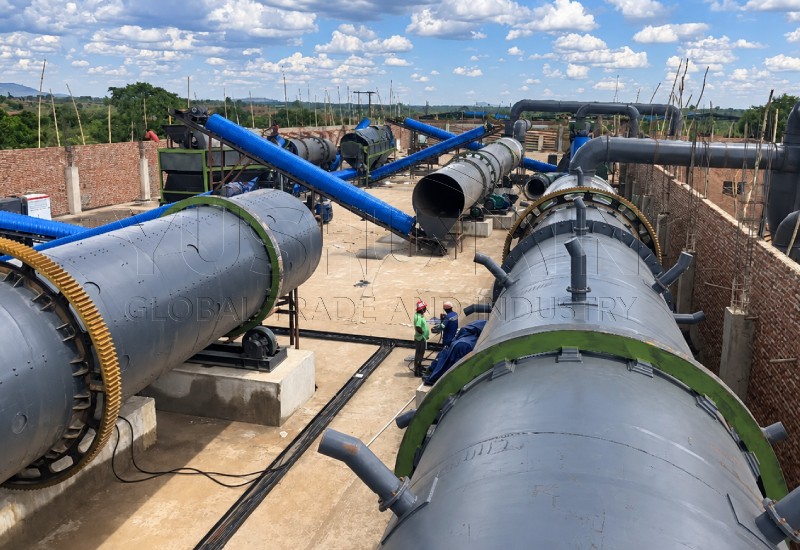
Depending on the formulation, steam-assisted blended fertilizer granulation can help improve material conditioning and granule formation. However, steam requirements, moisture addition, and operating temperature should be confirmed through material testing.
For example, an NPK 20-10-10 fertilizer granulation plant requires careful control of nitrogen, phosphorus, and potassium distribution to maintain consistent nutrient content in the finished granules.
4. Check Workshop Space and Supporting Systems
Granulation equipment requires additional installation space, foundations, power supply, and material conveying connections. You should also evaluate dust collection, exhaust gas treatment, hot air supply, and finished-product storage.
For an overview of available equipment configurations, refer to: https://www.mixedfertilizermachines.com/products/blended-fertilizer-granulation-line/
5. Learn from an Industrial NPK Project
An existing project can help you understand how a complete granulation system is configured. For example, explore this 15 TPH blended NPK fertilizer granulation plant solution for Philippines.
Before purchasing, prepare your raw material analysis, target capacity, fertilizer formulas, granule specifications, and existing equipment list. These details help engineers determine which machines can be retained and which additional units are necessary.
Explore our fertilizer granulation equipment and production solutions to plan an upgrade that fits your existing factory and investment budget.