A chicken processor or a frozen food factory that quick-freezes coated pieces needs a machine that fits the product size and the daily volume. The quick freezer machine for chicken in a commercial food processing plant uses cold air to freeze the pieces quickly, and the cost follows the capacity, the freezing method, and the cleaning design. This article explains the cost factors without a fixed figure.
quick freezer machine for chicken
How Does the Freezing Method Change the Cost of a Chicken Quick Freezer?
A tunnel freezer with circulating cold air and a vibrating bed moves the pieces while they freeze, and that design raises the performance without a long batch time. The IQF tunnel freezer for chicken products with cold air keeps the pieces separate, which protects the finished shape. A buyer that compares the batch time with the daily volume finds a food machinery figure that fits the plant. This method is the first cost driver in the food production line.
Which Capacity Factors Set the Quick Freezer Machine Cost in a Food Plant?
The hourly throughput, the product thickness, and the target core temperature all set the tunnel length and the refrigeration load. The automatic quick freezing system for coated chicken lines scales to these numbers, so a plant lists the volume before the purchase. A buyer that matches the capacity to the real output avoids an oversized machine that wastes energy. This match keeps the food equipment cost proportional to the frozen volume.
How Does the Quick Freezer Connect With the Chicken Nugget Processing Line?
After the coating and the frying stages, the product moves to the chicken nugget processing line for a quick freezing stage and then to the cold store. A short transfer keeps the pieces cold and stops the surface from warming. This connection turns the freezer into one controlled step in a complete food processing system. A steady flow also keeps the product separate for the final pack.
How Should a Factory Verify the Quick Freezer Before the Purchase?
Individual quick freezing preserves the shape and the texture, so the buyer runs a trial with the plant’s own chicken pieces. You can review the quick freezer manufacturer to confirm the air flow, the vibration, and the cleaning access. A measured run shows the freeze time and the product separation before the investment. This check turns the food equipment decision into a dependable cost choice.
How Does Quick Freezing Protect the Chicken Product and the Investment?
A fast freeze locks the moisture and keeps the coating firm, so the product holds its shape through the cold chain. This quality lowers the rejects and the rework that a slow freeze would cause. A producer who counts this gain sees the freezer as a food machinery asset that protects both the product and the selling margin. This detail keeps the food preparation result steady from the fryer to the cold store.
Conclusion
A quick freezer machine for chicken costs what the buyer asks of it: the capacity, the freezing method, and the cleaning design set the figure. These choices keep the product separate and the food processing investment clear. If you have interests, you can learn more about https://www.friedfoodsolutions.com/quick-freezer/
A root vegetable plant, a fruit processor, or a fresh produce factory that scrubs by hand needs a brush that cleans without damaging the skin. The vegetable washing roller brush for food safety uses rotating brushes and a water spray to clean and polish, and that design supports safety and quality. This article explains how the brush protects the food processing result.
vegetable washing roller brush
How Does the Brush Protect Product Quality?
The soft and hard roller brushes clean the surface and polish it, so the product keeps a clean, even appearance for the fryer or the pack. The soft and hard roller brush washer for produce removes the soil without bruising the fruit. This gentle scrub is the food manufacturing quality that the brush delivers.
How Does the Brush Support Food Safety?
The brush and the water spray remove the soil and the residue, and the hygienic stainless structure keeps the contact surface clean. The automatic brush washing machine for roots and tubers lowers the contamination risk. This clean is the food safety step that the washing stage must provide.
How Does the Washer Connect With Drying?
A brush washer works best when the washed produce moves directly to draining and drying, because wet product clumps and spoils. The line connects with an air dryer for a brush washing line, a drainer, and a packer. A smooth connection keeps the food processing system moving.
How Should a Buyer Match the Brush Hardness?
The brush hardness changes the clean and the peel, so a buyer matches the brush to the product and the target. A soft brush keeps the skin, while a hard brush removes more soil. This match keeps the food preparation gentle and complete.
How Should a Buyer Verify the Washer?
Vegetable washing rewards a trial with the plant’s own produce, because skin and soil change the brush. You can review the vegetable roller brush manufacturer before a purchase, and that review shows the brush options and service. A measured run turns the food machinery decision into a dependable result.
How Does the Brush Handle Mixed Produce?
The brush washer handles soft fruit and firm roots with the same machine, because the brush hardness and the spray change with the product. A plant that runs apples, berries, and potatoes can switch the settings between batches instead of buying separate washers. This flexibility keeps the food machinery footprint small and the wash gentle. A buyer who lists the produce first picks the brush options that cover the menu.
Conclusion
A vegetable washing roller brush supports safety and quality by cleaning and polishing the product with soft and hard brushes, then connecting the wash to drying. These choices keep the food production line clean and the product even. A stable scrub therefore keeps the surface clean and the yield high. A clean brush also keeps the water clear and the spray steady. A steady spray also lifts the loosened soil away from the surface. If you have interests, you can learn more about https://www.hadofps.com/products/fruit-and-vegetable-brush-washers/
A snack factory, a fried food plant, or a food processor that seasons a 1,000 kg/h line needs an applicator sized to that throughput. The automatic seasoning applicator for food production applies oil spray and powder dosing in one step, and the sizing follows the drum and the dose. This article explains how a buyer sizes the applicator for a food processing line.
automatic seasoning applicator for food production
How Does Capacity Match a 1,000 KG/H Line?
A 1,000 kg/h line fits a continuous seasoning drum, because the drum keeps the product tumbling while it applies the powder or the oil. The octagonal seasoning applicator with oil spray and powder dosing adjusts the drum speed and the dose to the product. A buyer who matches the capacity to the output keeps the food machinery sized to the volume.
How Do Oil Spray and Powder Dosing Fit the Line?
The oil spray prepares the surface, and the powder dosing applies the seasoning in a controlled amount, so the coating stays even across the whole 1,000 kg/h. The automatic seasoning system for a 1,000 kg/h line keeps the dose steady, which lowers the over-seasoning and the waste. This control is the food manufacturing quality that a manual mix cannot repeat.
How Does the Applicator Connect With Frying?
A seasoning applicator works best when the fried and drained product moves directly to it, because a manual handoff changes the coating. The machine connects with a continuous fryer for a seasoning applicator line, a cooling conveyor, and a packer. A smooth connection keeps the food processing system moving.
How Should a Buyer Match the Seasoning Type?
A dry powder, a slurry, or an oil coating each needs a different drum and dose, so the buyer matches the seasoning type to the product. The octagonal drum suits fragile snacks, while the continuous drum suits a steady stream. This match keeps the food preparation and the flavor even.
How Should a Buyer Verify the Sizing?
Seasoning applicator sizing rewards a trial with the plant’s own product, because the powder and oil ratio change the coat. You can review the seasoning applicator manufacturer before a purchase, and that review shows the dosing and service. A measured run turns the food machinery decision into a dependable 1,000 kg/h plan.
How Does the Drum Speed Change the Coat?
The drum speed sets how long the product tumbles in the seasoning, and a slower tumble protects a fragile snack while a faster one coats a sturdy piece. This adjustable speed keeps the oil and the powder even without breaking the product. It is the food preparation setting that the sizing follows. A buyer who tests the drum first makes a more dependable food machinery decision.
Conclusion
A buyer sizes an automatic seasoning applicator for a 1,000 kg/h line by matching the drum, the oil spray, and the powder dosing to the product. These choices keep the food production line flavoring evenly. If you have interests, you can learn more about https://www.friedfoodsolutions.com/seasoning-equipment/
A snack factory, a powder food plant, or a bakery that runs automatic packing depends on clean weighers and steady sealing to avoid stops. The industrial food packaging equipment for a food plant covers vertical film roll, powder, and pillow packing machines, and most maintenance issues start in the weigher or the sealing jaw. This article explains the common problems and the checks that keep a food production line running.
industrial food packaging equipment
How Does the Weigher Affect Packaging Accuracy?
The multi-head weigher divides the product into accurate portions, and a blocked head or a drifted setting changes the bag weight. The automatic food packaging machine with a multi-head weigher needs the heads checked and cleaned on a schedule, because residue throws the weight off. A plant that keeps the weigher accurate protects the food manufacturing quality and avoids the rejects that a wrong fill causes.
How Does the Sealing Jaw Cause Downtime?
The sealing jaw closes the film, and a worn jaw or a drifted temperature makes a weak seal that leaks or tears. The vertical film roll and powder packing machine for factories needs the jaw temperature and the film path checked daily. A clean, well-set jaw keeps the food handling sealed and the pack stable.
How Does the Powder Feeding Structure Clog?
The powder feeding structure carries fine material, and dust or moisture makes it clog and slow the line. A regular clean of the feeding path and the dust seals keeps the powder flowing. This routine protects the food equipment uptime in a powder or seasoning plant.
How Does the Machine Connect With a Conveyor Line?
A packing machine works best when the filled bags move directly to a conveyor and then to cartoning, because a manual handoff slows the line. The machine connects with a food conveyor system for a packaging line, and each handoff needs a matched speed. A smooth connection keeps the food processing system moving.
How Should a Plant Schedule Maintenance?
Packaging equipment runs continuously, so a planned stop for cleaning and jaw checks costs less than a failed seal in the middle of a shift. You can review the food packaging equipment manufacturer before a purchase, because spare parts decide how fast the machine returns to work. A fixed routine turns the food machinery decision into dependable uptime.
How Does Film Quality Affect the Seal?
The packaging film quality changes how cleanly the jaw seals, because a thin or stretched film leaks and tears while a matched film holds the seal. A plant that checks the film roll and the tension keeps the packs tight and the rejects low. This detail is part of the food preparation quality that the packing step protects, and a buyer who tests the film first makes a more dependable food machinery choice.
Conclusion
The most common industrial food packaging issues are weigher drift, a worn sealing jaw, and a clogged powder feed, and a plant prevents them with daily cleaning and a fixed check schedule. These habits keep the food production line packing steadily. If you have interests, you can learn more about https://www.hadofps.com/products/food-packaging-equipment/
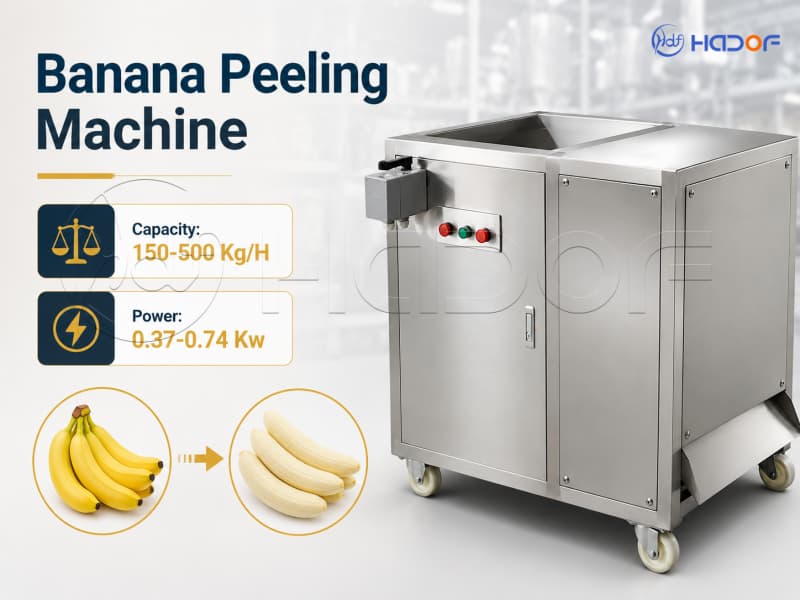
A banana chip maker or a fruit processing plant that runs a peeler finds that the finished quality follows the feed, the peeling grip, and the cleaning routine more than the machine name. The banana peeling machine for commercial food production prepares fresh bananas before slicing and frying, and a few operating choices keep the fruit whole and clean. This article explains how a factory optimizes the peeler for food preparation quality.
banana peeling machine for commercial food production
How Does the Feed Affect Peeling Quality?
The bananas must arrive at the peeler at a steady rate and a matched size, because a rush or a mix of sizes changes how cleanly the skin comes off. The automatic banana peeler for a chip line handles the fruit gently, so a consistent feed keeps the peel complete and the flesh intact. A factory that grades the bananas first keeps the food manufacturing result steady.
How Does Cleaning Protect the Product?
The peeler touches every banana, so a clean contact surface prevents residue and skin from sticking to the next fruit. The commercial banana peeling machine for a processing line needs a quick clean between shifts, because banana starch and skin build up fast. A clean peeler protects the food safety record and keeps the fruit appearance high.
How Does the Peeler Feed Slicing and Frying?
The peeled bananas move directly to slicing, then to frying, seasoning, and packing, so the peeler is the first machine in the line. A matched speed keeps the fruit moving without a pile-up at the slicer, which protects the cut and the color. This connection turns the food processing system into one smooth chain from peel to pack.
How Should a Factory Match the Model to the Volume?
The peeler comes in three models around 150, 300, and 500 kg/h, so a small maker and a large plant choose different sizes. A factory that matches the model to the daily banana volume avoids running a large peeler at half load or a small one beyond its speed. This match keeps the food machinery steady and the peel quality consistent.
How Should a Buyer Verify the Peeler?
Banana peeling rewards a trial with the plant’s own variety, because ripeness changes the skin. You can review the banana peeler manufacturer before a purchase, and that review shows the structure and service. A measured run turns the food machinery decision into a quality result.
How Does Ripeness Control Affect the Peel?
The ripeness of the banana changes how the skin separates, so a factory that grades the fruit before feeding keeps the peel clean and the flesh intact. Firmer bananas need a different grip than riper ones, and a mixed feed causes torn skin and lost product. The operator matches the peeler to the ripening stage, and the machine handles the rest. This food preparation control keeps the final chip or slice consistent. A buyer who tests the peeler across ripeness levels makes a more dependable food machinery choice. A related continuous fryer for a banana peeling line completes the same processing line.
Conclusion
A factory optimizes a banana peeling machine by keeping the feed steady, the contact surface clean, and the model matched to the volume, and by connecting the peeler smoothly to slicing and frying. These choices protect the finished product quality. If you have interests, you can learn more about https://www.friedfoodsolutions.com/banana-peeler-machine/
A central kitchen, a salad factory, or a fresh-cut vegetable plant that runs a vortex washing line depends on one machine staying clean, balanced, and available during peak hours. The vortex fruit and veg washer for a continuous food production line removes sand, mud, insects, and debris from leafy greens, cut vegetables, and soft fruit through circulating water, eddy current action, and bubble agitation. Maintenance determines how long that washing quality stays stable, so this article explains the daily cleaning, water management, inspection, and connection steps that keep a food processing system running without unplanned stops.
vortex fruit and veg washer
Which Daily Cleaning Steps Keep a Vortex Fruit and Veg Washer Hygienic?
A clean washing tank protects both the food and the machine. Operators rinse the semicircular tank after every shift, remove floating leaves and foam from the overflow outlets, and drain settled sand through the drain valve, because leftover material breeds bacteria and blocks the water flow. The filtration mesh also needs a daily check, since clean circulation water depends on a screen that passes water while trapping fine particles. A salad line that handles lettuce, spinach, arugula, and cabbage benefits from a short end-of-day rinse, while a root line that washes potato cubes and carrot slices clears more sediment. You should record each cleaning task, and that record turns routine washing care into a food safety habit.
How Does Water and Filtration Management Prevent Food Processing Downtime?
The water system drives the whole cleaning effect, so its condition controls the line speed. A stainless steel pump moves water through a semicircular tank at high flow, and the circulating stream forms the continuous eddies that lift sand and mud from every side of the product. Operators replace the water on a schedule, inspect the pump seal, and confirm that the filtration mesh removes debris without slowing circulation, because dirty water returns grit to otherwise clean produce. The industrial vortex cleaning machine for leafy greens and cut vegetables keeps working efficiently when a team watches water level, flow, and screen condition together. Good water management therefore lowers the food processing cost that comes from rework and rejected batches.
Which Inspection Points Help an Industrial Vortex Cleaning Machine Run Quietly?
Vibration and noise usually signal a small problem before it becomes a breakdown. The operator checks the stainless steel pump, the drive area, and the tank supports, and the operator listens for a change in the normal hum that the circulating water produces. Loose fasteners, a worn bearing, or an unbalanced fan can raise noise and shorten the life of the cleaning tank, so a weekly walk-around catches those issues early. The eddy current vegetable washing machine for fresh produce plants also needs stable footing, because an uneven floor changes how the water rolls and how gently the produce moves. A short inspection routine protects both the equipment and the delicate products it washes.
How Do Operators Protect Leafy Greens and Cut Vegetables During Maintenance?
Washing quality and maintenance work together, because a rough adjustment can tear the leaves that the machine protects. Cut lettuce, cabbage shreds, celery sections, spinach, and mixed salad greens stay intact when the water flow stays gentle and the tank keeps a consistent fill level. Potato cubes, carrot slices, lotus root pieces, and onion sections need enough eddy strength to release sand, while blueberries and cherry tomatoes need enough gentleness to avoid splitting. Operators set the bubble system and the water speed to the product, and they check those settings after every cleaning cycle. This attention to the food preparation detail keeps yield high and keeps fragile fresh produce moving toward the next stage.
How Does a Vortex Washer Connect With Air Drying and Sorting Equipment?
A vortex washer works best when the next machine matches its output. The discharge side feeds a vibrating dewatering unit, and the dewatered produce then moves to an industrial air dryer for washed fruit and vegetables, a manual sorting table, or a packing line. Each connection needs a matched height, speed, and product flow, because a mismatch forces operators to handle wet produce by hand. A central kitchen that plans washing, dewatering, and air drying as one food processing system keeps the line moving without spillage. Regular checks on the discharge chute and the feed height therefore protect the throughput of every machine that follows the washer.
Why Does Preventive Maintenance Protect a Food Equipment Investment?
Preventive maintenance replaces a reactive fix with a planned schedule, and that schedule usually costs less than emergency downtime. A factory that tracks cleaning, water changes, and part inspections extends the useful life of the pump, the tank, and the filtration system. You can review the food processing machinery manufacturer profile before a purchase, because service response, spare parts, and technical guidance decide how easy that maintenance becomes. A careful food equipment investment therefore includes the support that keeps the machine productive across many seasons.
Conclusion
A vortex fruit and veg washer keeps a food production line running when operators clean the tank daily, manage the water and filtration, inspect the pump and supports, and match the next machine to the washer output. These habits protect delicate produce and control the food processing cost of downtime. If you have interests, you can learn more about https://www.hadofps.com/products/vortex-cleaning-machine/
A root vegetable processor needs to match roller length, brush hardness, water spray, and residence time to the raw material instead of selecting one configuration for every crop. Potatoes, carrots, ginger, sweet potatoes, cassava, yam, and taro create different cleaning and peeling demands because each crop has a different shape, skin strength, soil load, and acceptable product loss. A continuous root vegetable washing and peeling machine with adjustable brush rollers gives food factories a practical way to combine mud removal, polishing, light peeling, and continuous product transfer in one food processing procedure. The correct configuration also supports downstream slicing, dicing, blanching, frying, freezing, drying, or packaging.
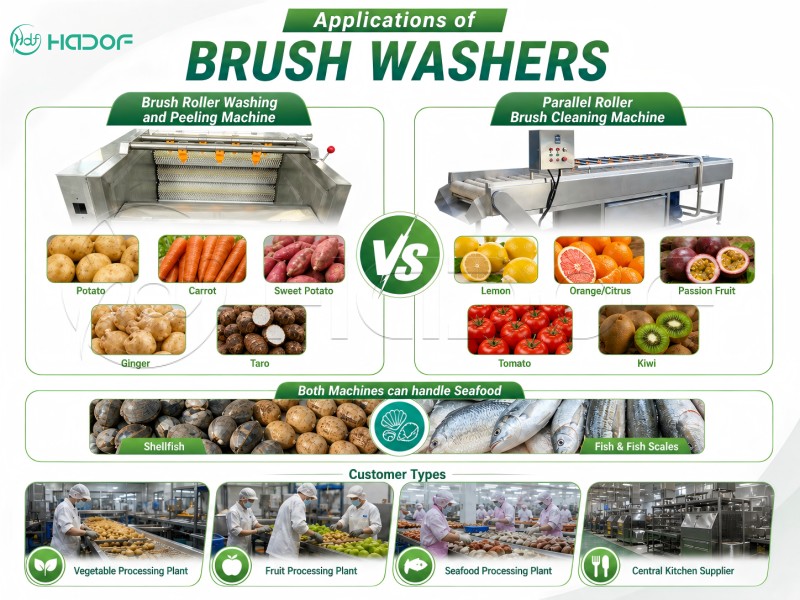
Applications of Brush Washers
How Does Roller Brush Vegetable Peeler Roller Length Affect Continuous Root Vegetable Washing And Peeling?
Roller length influences both treatment time and practical food production capacity. The current Hadof product page lists 800, 1,000, 1,500, and 2,000 mm standard roller lengths, with standard processing capacities from approximately 700 to 2,000 kg/h. Small and medium vegetable workshops commonly use shorter machines, while larger continuous food manufacturing projects use longer rollers for higher throughput and longer surface contact. The current product data therefore differs from the older search phrase “roller brush vegetable peeler 600 to 1800 mm roller length,” so equipment selection should follow the current model table rather than that older numerical range. An industrial brush peeler with 800 to 2,000 mm roller options lets a project team match output, workshop length, and cleaning intensity more accurately.
Material geometry also changes the required roller length. Long or irregular ginger roots need enough space to turn and expose recessed surfaces, while round potatoes move more predictably across rotating brushes. Hadof notes that larger models support continuous high-capacity root vegetable preparation, and the company recommends extra capacity margin for irregular, high-fiber crops such as ginger when crowding could reduce cleaning contact.
Which Soft Brush And Hard Brush Options Fit Potatoes, Carrots, Ginger, And Cassava?
Brush hardness determines how aggressively the machine treats the vegetable surface. Soft brushes focus on washing and polishing, so fresh carrots, new potatoes, and produce that needs attractive retail appearance often benefit from gentler contact. Hard brushes create stronger friction and suit crops that need more skin removal before further food preparation. Spiral scraper blades can add a stronger peeling action for continuous industrial projects that need deeper treatment and faster forward movement. The product page also identifies PBT or PA66 as possible brush-filament materials for relevant configurations.
A soft and hard brush peeling system for potatoes and carrots can therefore support factories that process more than one crop on the same food processing equipment. Ginger processors may use gentler settings when the factory wants to retain more flesh around irregular knobs, while potato processors can increase friction when the food manufacturing process requires stronger peeling. The broader category of root vegetables used in commercial food processing includes crops with very different surface structures, so a factory gains more flexibility when the machine allows brush selection instead of forcing every material through one fixed treatment.
How Should A Continuous Spray Washing System Work With Brush Peeling?
Water spray performs a different task from the brushes. Rotating brushes loosen mud, surface residue, and peel, while clean water carries loosened material away from the contact zone. The related Hadof process guide explains that brush roller washing uses multiple rotating brushes together with clean water spray and that operators can adjust brush hardness, spray water, and process intensity according to the vegetable. The same guide explains that high-pressure spray washing can remove mud before peeling or remove peel fragments and starch after peeling.
A food factory therefore gains better control when it treats spray design as part of the full food treatment system. Heavy-soil potatoes may need soaking before brush cleaning, while ginger may need longer brush contact and carefully directed spray around recessed surfaces. A multi-stage root vegetable washing and cleaning process can combine soaking, bubbling, brush scrubbing, spray rinsing, inspection, cutting, and secondary washing. That sequence reduces the load on one machine and helps the food production system manage soil, peel waste, starch, and wastewater in separate stages.
What SUS304 Brush Peeling Machine Capacity Fits A Food Processing Plant?
A food processing plant should match machine capacity to real hourly feed instead of maximum theoretical output alone. A factory that runs several hours continuously needs enough roller area to prevent crowding, while a central kitchen with intermittent batches can use a smaller footprint. The Hadof page lists approximately 700–2,000 kg/h across the standard brush peeler range, and the related process page places brush roller washing within broader root vegetable lines that can also include soaking, high-pressure washing, inspection, cutting, and further treatment.
A SUS304 roller brush washer peeler for food factories can suit wet food preparation environments when the selected configuration uses SUS304 food-contact construction. The related process page states that SUS304 food-contact components support wet processing and daily sanitation. A processor should also consider feed consistency, soil level, peeling depth, downstream cutting capacity, and food waste management because the brush machine cannot operate efficiently when another stage limits the complete line.
How Do Brush Peeling Machine Quotation Requirements Affect Line Integration And Investment Planning?
A useful equipment quotation needs more than an hourly capacity number. The project team needs to define raw material, skin condition, average product size, soil load, target peeling depth, daily working time, workshop dimensions, water conditions, power supply, and downstream process. Those details determine whether the factory needs one brush washer, two brush stages, a centrifugal peeler, spiral scraper blades, or a wider root vegetable cleaning line. Hadof describes separate solutions for small workshops, medium continuous operations, and industrial projects, and the company connects larger brush machines with elevators, sorting belts, and packaging machinery.
This planning method helps food factories compare equipment investment through production needs instead of focusing only on one machine. A potato chips plant may place cutting and starch washing after peeling, while a frozen carrot line may add blanching and quick freezing. A ginger powder plant may prioritize soil removal, controlled peeling, slicing, and drying. Hadof produce-processing system engineering covers washing, peeling, cutting, pretreatment, drying, freezing, frying, and auxiliary food processing machinery, which allows buyers to evaluate the brush peeler as one part of a complete food manufacturing process.
Which Continuous Root Vegetable Washing And Peeling Machine Configuration Fits The Final Product?
The final product should determine the brush peeler configuration. A retail carrot processor may favor soft brushes and controlled spray because appearance and product yield matter more than deep skin removal. A potato snack factory may require stronger brushing or scraper-assisted peeling because the next food preparation stages include cutting, washing, blanching, and frying. A ginger processor may need additional roller length and more careful spray management because irregular surfaces trap soil. Cassava and sweet potato projects may require harder treatment when thicker skin creates greater peeling resistance.
The strongest configuration therefore combines the right roller length, brush hardness, spray arrangement, and line speed around the actual raw material and food production objective. Factories that need more model information can learn more about available brush peeler configurations before matching the machine to upstream washing and downstream cutting, drying, freezing, or frying machinery.