What Makes Disc Granulation the Preferred Method in Mineral Fertilizer Production?

Mineral fertilizer manufacturing relies on advanced granulation processes to convert fine mineral powders into uniform, durable, and easily handled granules. The use of rock-based raw materials such as phosphate ore, potash, dolomite, limestone, and gypsum requires precise control over particle size, moisture, and density. Among all existing granulating methods, the disc granulation process stands out for its high efficiency, flexible operation, and adaptability to various mineral fertilizer formulations. The following analysis explores why this method achieves such wide acceptance in modern mineral fertilizer production and how industries benefit from it.


Raw Materials in Mineral Fertilizer Production: How Do Different Minerals Support Industrial Needs?

Mineral fertilizers use a broad range of mined raw materials, and each mineral brings distinct value to the final product. For instance, rock phosphate serves as a primary phosphorus source in phosphate fertilizer production, while potash ore contributes potassium for NPK formulations. Dolomite and limestone supply calcium and magnesium, improving soil conditioning and neutralizing acidity in certain industrial fertilizer compositions. Gypsum and sulfur minerals support sulfur-based fertilizer preparations that cater to specific nutrient demands in high-value crops or industrial soil restoration projects.

Chemical, mining, and environmental industries rely on these mineral resources not only for agricultural purposes but also for waste management and mineral recycling programs. For example, mine waste management projects often use mineral granulation technologies to stabilize waste particles and reduce environmental risks. Therefore, raw material diversity demands a flexible and reliable granulation process that can handle different densities, moisture levels, and mineral hardness levels.

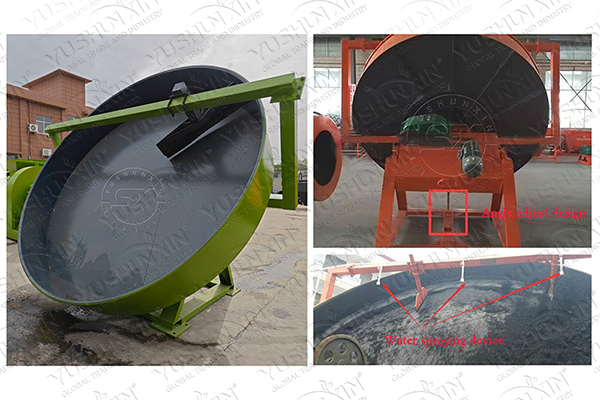
Disc Pelletizer for Mineral Fertilizer Production

Why Do Manufacturers Prefer Disc Granulators for Mineral Fertilizer Granulation?

In mineral fertilizer manufacturing, disc granulators—also known as pan pelletizers or pan granulators—offer superior control over granule size and shape. This equipment allows the operator to adjust the disc angle, rotational speed, and moisture addition, resulting in consistent particle formation. When dealing with minerals such as phosphate rock or potash ore, granule uniformity plays a critical role in product strength and storage stability.

The open structure of the disc granulation machine simplifies monitoring and adjustment during operation, reducing waste and improving yield. Compared with drum granulation or spray granulating methods, the disc granulation process uses a simpler design, requires less energy, and minimizes coating material losses. Moreover, the disc granulator’s ability to handle fine mineral powders without extensive pre-treatment enhances production efficiency in large-scale fertilizer manufacturing lines. The granulation process also supports continuous operation, which benefits mineral-based fertilizer producers seeking stable throughput.


What Equipment Supports the Complete Mineral Fertilizer Granulation Process?

A complete mineral fertilizer production system usually includes several types of machinery to ensure efficient processing. Before granulation, a jaw rock crusher or ore fertilizer crusher machine breaks down large mineral chunks into fine powders suitable for pelletizing. In some production plans, a Raymond mill offers precise grinding for limestone or dolomite powder preparation. After granulation, a rotary screening machine or vibrating screen separates qualified granules from oversized or undersized particles, which return to the disc granulator for further processing.

These integrated systems form the foundation of various industrial fertilizer production schemes, such as limestone fertilizer production solutions, rock phosphate fertilizer production, and mineral organic fertilizer production lines. Each process benefits from the flexibility and efficiency of disc granulation, which adapts easily to changes in raw mineral composition.


Conclusion

Disc granulation provides stable, low-cost, and controllable granule formation for industries that depend on mineral-based fertilizers. Its design meets the demands of rock, ore, and mineral powder processing, ensuring consistent particle size and improved product performance. When combined with auxiliary equipment such as crushing machines, screening units, and drying systems, the disc granulation line forms a compact and efficient mineral fertilizer manufacturing solution.

For manufacturers seeking reliable production technology and durable machinery, a professional fertilizer equipment manufacturer—Yushunxin—offers advanced disc granulators, complete mineral fertilizer production lines, and customized engineering support. By adopting such technology, enterprises strengthen their competitiveness in the continuously evolving mineral fertilizer industry. You can visit: https://www.mineralfertilizerproductionsolutions.com/product/disc-granulator-machine/

Essential Equipment for Making Fish Amino Acid Liquid Fertilizer (Fish Hydrolysate Production Line Guide)

Fish amino acid (FAA) has become a popular input in organic farming due to its rich nitrogen content and excellent plant-boosting properties. For manufacturers looking to set up a fish amino acid liquid fertilizer production line, choosing the right equipment is crucial for efficiency, product quality, and cost control. Below is an overview of the essential machines used in a modern fish hydrolysate plant, along with alternative names and commonly searched keywords to maximize visibility.

1. Crushing and Pre-Processing Equipment

Whole fish waste, trimmings, or by-products must be reduced to smaller particles before enzymatic hydrolysis.
Common equipment includes:

  • Fish waste crusher / organic material grinder / wet material pulverizer
  • Bone-breaking mill for viscous feedstock

These machines help create a uniform slurry that improves enzyme contact and fermentation efficiency, which is essential in liquid fertilizer processing.

2. Enzymatic Fermentation Tank

A stainless-steel fermentation tank—also called a liquid fertilizer fermenter, enzymatic digester, or biofermentation reactor—is the core equipment for producing high-quality fish amino acid fertilizer.
Key features to look for:

  • Temperature control for stable hydrolysis
  • Agitator for consistent mixing
  • Anti-corrosion inner walls
  • Ports for enzymes and nutrient additives

A good fermentation system significantly impacts the nitrogen level, smell reduction, and stability of your fish protein liquid fertilizer.

3. Mixing and Homogenizing System

After fermentation, the product still needs proper blending to achieve a uniform liquid. Equipment options include:

  • Liquid mixer / high-shear mixer / agitator tank
  • Inline homogenizer for consistent viscosity
    These machines help dissolve molasses, amino acids, or stabilizers added during the conditioning stage.

4. Solid–Liquid Separation (If Required)

Some producers prefer clearer FAA products. For that purpose, a dewatering machine can be used:

  • Screw press separator
  • Filter press or fine mesh screen

These solutions enhance clarity and remove coarse residues, improving the product’s storage performance.

5. Storage and Maturation Tanks

Fish amino acid usually requires a short aging period, so storage tanks—also known as buffer vessels—are essential.
Key functions:

  • pH stabilization
  • Odor reduction
  • Sediment control

HDPE or stainless-steel tanks are both commonly used in liquid organic fertilizer plants.

6. Filling and Packaging Unit

For commercial sales, an efficient liquid fertilizer filling machine is needed.
Options include:

  • Semi-automatic liquid fillers (small budget)
  • Fully automatic bottle filling lines (large-scale production)

These machines handle bottling, capping, and labeling to streamline final packaging.

Choosing the right fish amino acid fertilizer equipment not only increases productivity but also ensures a stable, market-ready product with high nutrient value. If you want, welcome to visit: https://www.liquidfertilizerplants.com/products/fish-protein-liquid-fertilizer-manufacturing/

Линия по гранулированию бентонитового наполнителя для кошачьих туалетов — двойная выгода для здоровья питомцев и экологичного производства

В последние годы, с ростом уровня жизни, рынок товаров для домашних животных активно развивается, а спрос на наполнитель для кошачьих туалетов стремительно увеличивается. Бентонитовый наполнитель благодаря отличной впитывающей способности, устранению запаха и образованию комков стал первым выбором многих владельцев кошек. Задумывались ли вы, как эти, казалось бы, обычные гранулы производятся массово, эффективно и безопасно? Ответ кроется в современной линии по гранулированию бентонитового наполнителя.

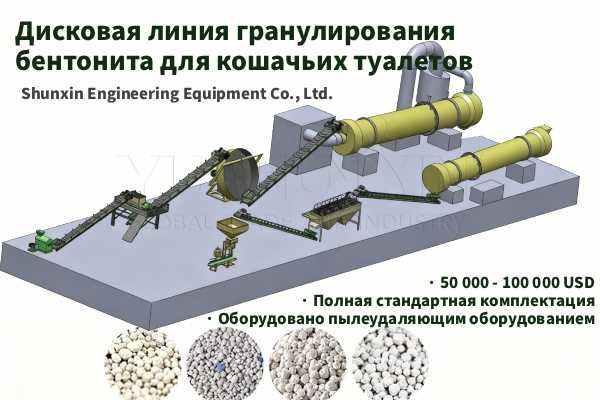
Дисковая-линия-гранулирования-бентонитовый-наполнитель-для-кошачьего-туалета

1. Преимущества бентонитового наполнителя

Бентонит — это натуральный глинистый минерал, который после специальной обработки обладает:

  • Отличной впитывающей способностью, быстро удерживает жидкость и предотвращает распространение запаха.
  • Превосходным комкующим эффектом, что облегчает уборку.
  • Натуральным и безопасным составом, снижая риски для здоровья кошек.

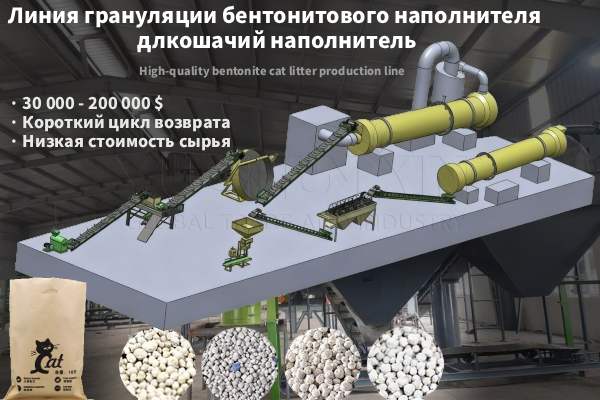
2. Технологический процесс линии по гранулированию бентонитового наполнителя

1. Предварительная обработка сырья
Выбранный качественный бентонит дробится до мелкой пыли, затем просеивается для удаления примесей и крупных частиц, что обеспечивает качество дальнейшей грануляции.

2. Смешивание и увлажнение
Порошкообразный бентонит смешивается с необходимым количеством воды в смесителе до достижения оптимальной влажности для образования гранул.

3. Гранулирование
Увлажнённый бентонит поступает в гранулятор (например, дисковый или барабанный), где под действием вращения формируются равномерные гранулы.

4. Сушка и охлаждение
Свежие гранулы содержат много влаги, поэтому их сушат в сушильных установках, а затем охлаждают, чтобы избежать слипания.

5. Просеивание и возврат
Готовые гранулы проходят через вибросито для отделения слишком больших или мелких частиц. Стандартные гранулы направляются на упаковку, остальные возвращаются на повторную переработку.

6. Автоматическая фасовка
Финальный наполнитель автоматически взвешивается, расфасовывается и герметично упаковывается, что обеспечивает чистоту и удобство хранения и транспортировки.

Bentonite-cat-litter-production-line

3. Автоматизация и экологичность

Современные линии по гранулированию оснащены системой автоматического управления PLC, что позволяет интеллектуально контролировать процесс производства и минимизировать ошибки и затраты на рабочую силу. Установлены системы очистки воздуха и фильтрации для защиты окружающей среды и здоровья сотрудников, поддерживая идею устойчивого развития.

4. Почему стоит выбрать профессионального производителя оборудования?

  • Отработанные технологии: Богатый опыт в отрасли гарантирует стабильное качество продукции.
  • Энергоэффективность и высокая производительность: Оборудование с низким потреблением энергии и высокой производительностью помогает снизить издержки.
  • Индивидуальный подход: Возможность проектирования линии исходя из потребностей клиента.
  • Полный сервис: Пусконаладка, обучение персонала, техническое обслуживание и поддержка.

Линия по гранулированию бентонитового наполнителя не только обеспечивает комфорт и чистоту в домах любителей кошек, но и способствует экологичному развитию индустрии товаров для животных. Эффективное и экологичное оборудование — залог успешного развития предприятия. Приглашаем к сотрудничеству всех заинтересованных! Свяжитесь с нами для получения подробных схем, консультаций и организации визита на производство. Более подробную информацию можно найти на сайте:https://www.sxmashina.com/proizvodstvo-bentonitovykh-napolniteley-dlya-koshachikh-tualetov/

Key Machinery for Building an Efficient Biofertilizer Production Line

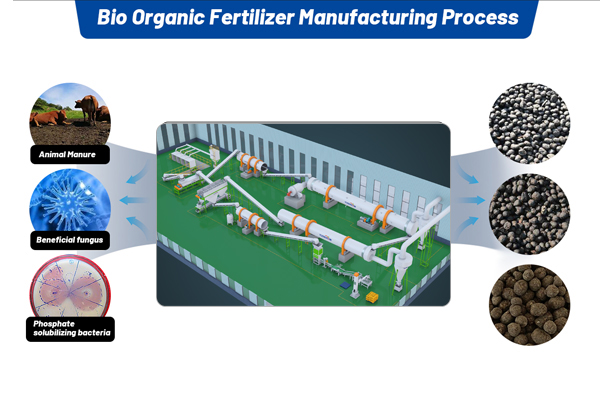
Selecting the right biofertilizer production equipment is essential for anyone planning to establish a reliable and efficient organic fertilizer manufacturing plant. Because biofertilizer is produced through multiple steps—composting, crushing, mixing, fermentation, granulation, drying, and packaging—the performance of each machine directly affects the final nutrient content and stability of the product. This guide introduces the core equipment categories used in a modern biofertilizer production line and explains how to choose machinery that matches your raw materials and production scale.

  1. Composting and Fermentation Systems

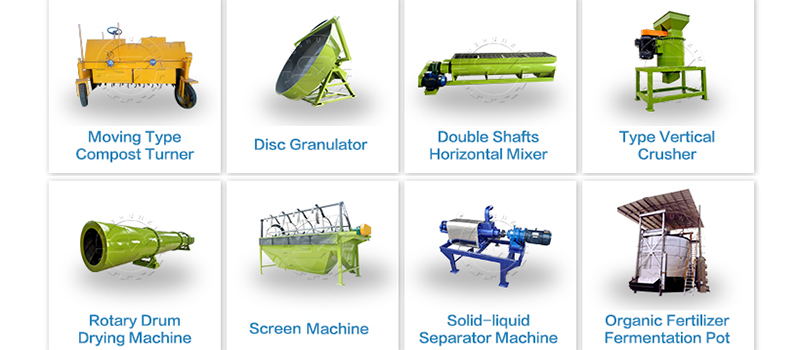
The heart of any organic fertilizer production facility is the composting stage. Depending on the volume and moisture level of raw materials like livestock manure, crop residues, sludge, or food waste, manufacturers typically choose among:

Aerobic compost turners (windrow turners, groove-type compost turners)

In-vessel fermentation tanks for controlled, enclosed composting

Horizontal or vertical bio-fermentation reactors for rapid decomposition

These machines ensure proper aeration, temperature rise, and pathogen elimination. For small to medium plants, a groove-type compost turning machine offers good cost-performance, while larger facilities may prefer an automated in-vessel composting system to save labor.

  1. Crushing, Mixing, and Pre-Processing Equipment

Before granulation, materials must be uniform. A fertilizer crusher—such as a semi-wet material crusher or chain crusher—helps break down clumps for better mixing. High-moisture raw materials benefit from a semi-wet crusher that prevents clogging.

A horizontal mixer, double-shaft blender, or vertical mixer then combines additives like humic acid, beneficial microbes, or NPK supplements to achieve a balanced formula. Consistent mixing improves nutrient distribution throughout the final biofertilizer product.

  1. Granulation Machines for Shaping the Product

If pelletized biofertilizer is required, several biofertilizer granulation machines are available:

Disc (pan) granulators for flexible capacity

Drum granulators for continuous, large-scale pelleting

Flat die and ring die granulators for uniform organic pellets

Double roller press granulators for low-moisture powder-to-granule processing

Each type caters to different raw material moisture levels and finishing requirements.

  1. Drying, Cooling, Screening, and Packaging

To increase storage stability, granules often pass through a rotary dryer and cooler. A screening machine removes oversized or undersized particles to ensure consistent quality.

The final step uses automatic or semi-automatic packing machines for accurate bagging, improving efficiency and reducing labor cost.

YUSHUNXIN can provide you with bio-fertilizer production equipment of various specifications. Welcome to inquire!

Final Thoughts

Choosing suitable organic biofertilizer machinery greatly influences operating cost, product quality, and long-term profitability. When equipment matches your raw materials, moisture level, and capacity goals, you can build a high-efficiency, low-maintenance biofertilizer production plant that consistently delivers premium products. If you want to know about these machine, welcome to visit: https://www.biofertilizerproduction.com/faq-items/what-is-the-necessary-equipment-for-biofertilizer-production/

What Are the Trends in Disc Granulator Technology for Mineral Fertilizer Production?

The manufacturing of mineral fertilizers increasingly depends on advanced granulation equipment. In modern mineral fertilizer production, a disc granulator—or pan granulation machine—plays a vital role in transforming fine mineral powders into uniform, durable granules. This process supports stable particle size, high product strength, and efficient nutrient distribution. As mineral resources such as phosphate rock, potassium ore, and limestone become more diverse in use, industries seek better mineral processing machinery to ensure consistent quality and environmentally friendly production.


What Types of Raw Mineral Materials Are Suitable for Granulation and How Do They Benefit Different Industries?

The mineral fertilizer sector utilizes multiple raw materials mined or processed from natural deposits. Common examples include rock phosphate, limestone, dolomite, gypsum, and potassium chloride. Each mineral offers different properties and industrial advantages.

For example, rock phosphate supports phosphorus-based fertilizer manufacturing and also contributes to phosphate mine waste management. Limestone serves as a calcium source and aids in pH regulation during fertilizer production procedures. Gypsum improves soil structure and provides sulfur, while dolomite supplies magnesium for plant nutrition and industrial chemical processes. In addition, potassium ore provides essential nutrients for compound fertilizers and supports industries producing NPK granules.

Each mineral industry requires specific granule strength, moisture control, and particle uniformity in its fertilizers. Therefore, producers rely on precise disc granulation machines that can handle fine mineral powders and transform them into strong, spherical particles suitable for bulk handling and transport.

Disc Pelletizer for Mineral Fertilizer Production

How Do Disc Granulators and Related Equipment Improve the Mineral Fertilizer Manufacturing Process?

Mineral fertilizer production often involves several interconnected machines: an ore fertilizer crusher machine for particle size reduction, a disc or pan granulator for precise pelletizing, and a screening machine for separating qualified granules from fine powder.

The disc granulator operates with a rotating inclined pan that continuously mixes and granulates mineral materials under controlled moisture and speed conditions. This continuous granulating process produces uniform pellets that meet industry specifications. When combined with pre-crushing equipment such as a jaw rock crusher or fine grinding mill, the granulation process achieves optimal raw material preparation.

In advanced production lines—such as rock phosphate fertilizer production, limestone fertilizer production, or bulk fertilizer blending plants—manufacturers integrate granulation machinery with drying and cooling systems to maintain particle stability. The entire production solution thus ensures higher yield, reduced dust, and improved granule quality.


What Are the Latest Trends in Disc Granulator Technology for Mineral Fertilizer Plants?

Recent technological progress emphasizes automation, energy efficiency, and material adaptability in disc granulation systems. Manufacturers design granulators with optimized pan angles, adjustable rotation speeds, and intelligent control systems to ensure consistent particle formation. In addition, innovations in liner materials and corrosion-resistant coatings enhance durability when processing abrasive mineral feedstocks such as phosphate rock or potassium ore.

Another emerging trend is the integration of monitoring sensors that track moisture, granule size, and output uniformity in real time. This information supports data-driven optimization, reducing production waste and operational costs. Furthermore, in mineral organic fertilizer production lines, hybrid granulation systems combine mechanical pelletizing with chemical reactions to improve nutrient availability and product performance.

These developments reflect the growing demand for flexible disc granulator machinery capable of adapting to different ore-based fertilizer formulations and complex production environments.


Conclusion

Modern mineral fertilizer manufacturing depends on reliable and advanced granulation equipment. From raw material grinding to final pellet screening, each stage requires precision engineering and stable process control. Trends in disc granulator technology reveal a shift toward intelligent, durable, and energy-efficient designs that suit diverse mineral materials such as rock, ore, and mine by-products.

Producers seeking efficient mineral fertilizer production solutions can benefit from integrated systems combining disc granulators, crushers, and screening machines. A professional fertilizer equipment manufacturer—Yushunxin—continues to provide innovative disc granulation technology and complete mineral fertilizer production lines, supporting sustainable and efficient industrial fertilizer manufacturing worldwide. You can visit: https://www.mineralfertilizerproductionsolutions.com/product/disc-granulator-machine/

ГОРЯЧАЯ ПРОДАЖА! Гранулятор удобрений с двумя валиками – складские остатки к концу года, успейте купить выгодно!

Год подходит к концу, и сейчас самое время для обновления оборудования и расширения производства. В благодарность за доверие и поддержку наших новых и постоянных клиентов мы запускаем специальную акцию по распродаже складских остатков грануляторов удобрений с двумя валиками! Большой выбор, выгодные цены, быстрая отгрузка — обеспечьте модернизацию своей линии в новом году!

1. Большой ассортимент на складе, гарантированное качество

Мы заранее подготовились к сезонному спросу и пополнили склад основными моделями грануляторов удобрений с двумя валиками. Всё оборудование проходит строгий контроль качества и отправляется с завода напрямую. Подберём оптимальное решение для производства комплексных, органических удобрений или почвенных добавок.

2. Конец года — большие скидки!

В рамках акции к концу года действуют следующие преимущества:

  • Специальные скидки на все складские модели – максимальная выгода;
  • Подарочный комплект расходников при покупке;
  • Персональные предложения и дополнительные бонусы для оптовых заказчиков.

3. Быстрая отгрузка — минимум ожидания

Вся техника в наличии, отправка сразу после подтверждения заказа. Это значит, что вы сможете запустить новое оборудование максимально быстро, увеличить объёмы производства и опередить конкурентов на рынке.

4. Техническая поддержка и сервис

Каждому клиенту предоставляем полный спектр сопровождения:

  • Бесплатное обучение персонала, помощь в пусконаладке;
  • Гарантия на всё оборудование, пожизненное обслуживание;
  • Профессиональная команда всегда на связи — работайте без простоев!
granulateur extrudeur à double rouleau

5. Почему выбирают наш гранулятор с двумя валиками?

  • Энергоэффективность: сухое прессование без пара и нагрева — экономия и экологичность;
  • Компактность: минимальная площадь, лёгкое управление и обслуживание;
  • Универсальность: подходит для NPK, органических и других видов удобрений;
  • Качество гранул: прочные, ровные, привлекательные на вид;

6. Как заказать?

Количество ограничено! Не упустите шанс:https://www.sxmashina.com/rolikovyy-granulyator/

Годовая распродажа складских остатков — ваш шанс обновить производство без задержек! Присоединяйтесь к нам, чтобы встретить новый год с новым оборудованием, повысить эффективность и успешно запустить новые проекты! Гранулятор удобрений с двумя валиками — в наличии и по выгодной цене. Ждём ваших звонков и визитов!

Решения для линий гранулирования, подходящих для торфа

Торф — это важный органический материал, широко используемый в сельском хозяйстве, садоводстве, улучшении почвы и в экологических целях. Он обладает отличными водоудерживающими, воздухообменными и питательными свойствами. Однако исходный торф обычно представляет собой рыхлый, влажный, объемный порошкообразный или комковый материал, что создает определённые неудобства при хранении и транспортировке. Гранулирование торфа не только облегчает его хранение и перевозку, но и значительно повышает его ценность. В этой статье мы представим производственную линию, специально предназначенную для переработки торфа в гранулы.

Линия-по-производству-гранул-бентонита

1. Необходимость гранулирования торфа

  1. Удобство упаковки и транспортировки: Гранулированный торф имеет высокую плотность, не пылит, снижает логистические расходы.
  2. Улучшение физических свойств: Гранулы однородные, с хорошей сыпучестью, удобны для механического внесения и смешивания.
  3. Снижение потерь и отходов: Гранулированная форма облегчает дозированное применение и повышает эффективность использования.
  4. Расширение областей применения: Можно добавлять различные компоненты, создавать специальные функциональные гранулы.

2. Основные этапы производственной линии гранулирования торфа

  1. Предварительная обработка сырья
    Торф просеивается, удаляются примеси и крупные комки. При необходимости регулируется влажность, чтобы обеспечить оптимальные условия для гранулирования.
  2. Равномерное смешивание
    Сырьё поступает в смеситель, где тщательно перемешивается для обеспечения однородности будущих гранул.
  3. Основная гранулирующая машина
    В зависимости от типа торфа применяются вальцовые (роликовые) грануляторы, барабанные грануляторы или грануляторы с плоской матрицей. Вальцовые подходят для порошкообразного торфа с невысокой влажностью, обеспечивают высокую скорость и низкое энергопотребление. Барабанные и плоскоматричные грануляторы лучше подходят для влажного торфа, обеспечивая высокую выходную мощность гранул.
  4. Оформление гранул и просеивание
    После гранулирования гранулы проходят через калибровочные и просеивающие машины для отделения стандартных гранул от некондиции, что позволяет добиться однородного размера.
  5. Сушка и охлаждение
    При необходимости (если гранулы влажные) используется барабанная сушилка и охладитель для повышения прочности гранул и увеличения срока хранения.
  6. Упаковка готовой продукции
    На заключительном этапе гранулы автоматически взвешиваются, фасуются и упаковываются для дальнейшей реализации и транспортировки.

3. Преимущества линии гранулирования торфа

  • Высокая адаптивность: Параметры оборудования легко настраиваются под разные типы торфа (высокоразложившийся, низкоразложившийся, травяной или древесный торф).
  • Высокий уровень автоматизации: Линия работает в автоматическом режиме, снижая трудозатраты и повышая производительность.
  • Экологичность и энергосбережение: Закрытая система снижает уровень пыли, оборудование экономично и соответствует стандартам экологичности.
  • Простота обслуживания: Износостойкие и коррозионностойкие материалы повышают надёжность и срок службы оборудования.

4. Примеры применения

Многие отечественные и зарубежные производители почвенных улучшителей, субстратов для рассады и ландшафтных компаний уже используют линии гранулирования торфа, что значительно повышает качество их продукции и конкурентоспособность на рынке. Гранулированный торф становится новым трендом как для экспорта, так и для широкого использования внутри страны.

Линия гранулирования торфа помогает решить множество проблем, связанных с использованием и транспортировкой сырого торфа, способствует более эффективному использованию ресурса и развитию отрасли. Инвестиции в современную автоматизированную линию гранулирования торфа — это ключ к выпуску конкурентоспособной и востребованной продукции и к устойчивому развитию вашего бизнеса. Свяжитесь с нами, чтобы получить индивидуальную консультацию и подобрать оптимальное решение для вашего производства! Более подробную информацию можно найти на сайте:https://www.liniyaudobreniy.com/konfiguratsiya-linii-po-proizvodstvo-organicheskikh-udobreniy-proizvoditelnostyu-5-6-tonn-v-chas/

Key Parameters for Stable Quality in Liquid Fertilizer Manufacturing

Maintaining stable product quality in liquid fertilizers—whether they are liquid biofertilizers, soluble NPK solutions, or customized fluid nutrient blends—depends heavily on accurate control of pH and concentration. These two parameters influence nutrient solubility, microbial activity, shelf stability, and compatibility with irrigation systems. In small- and medium-scale liquid fertilizer plants, improper pH adjustment and inconsistent concentration are among the most common causes of precipitation, fermentation failure, and product degradation.

Why pH Control Matters

Each type of liquid nutrient solution has an optimal pH range. Strongly acidic or alkaline conditions can reduce nutrient availability and may even deactivate beneficial microorganisms in microbial fertilizers. For example, organic extract–based liquid fertilizers often require a mild acidic range to remain stable, while chelated micronutrient solutions perform better in slightly neutral environments. If the pH drifts outside the recommended range, crystallization and sedimentation can quickly appear.

Factors Affecting Nutrient Concentration

Concentration refers to the density of dissolved fertilizer components in the solution. In NPK liquid fertilizer production, too high a concentration increases viscosity and reduces solubility, making the solution unstable during storage. In liquid biofertilizers, excessively concentrated materials can harm living microbial strains. Temperature, water quality, and the mixing sequence all influence concentration consistency. When untreated water is used, minerals such as calcium or magnesium may bond with phosphate, forming insoluble residues.

Practical Methods for pH Adjustment

Producers commonly use mild acids like phosphoric acid or citric acid to lower pH, and potassium hydroxide or ammonia water to increase it. The key is adding them gradually while stirring to avoid sudden jumps. Using a digital pH meter during both mixing and storage helps monitor fluctuations. In organic waste–derived liquid fertilizers, the pH sometimes rises naturally during microbial fermentation. In such cases, controlled aeration and timely nutrient supplementation help keep the pH within a stable range.

Techniques for Managing Concentration Levels

A good practice is preparing a base solution at medium strength, then diluting or enriching it according to product grade. Filtration systems are also essential for keeping the nutrient solution stable. Fine-mesh filters and sediment tanks remove undissolved particles before packaging. For multi-component soluble fertilizers, a sequential dissolving approach—starting with nitrogen sources, then potassium salts, and adding phosphorus last—can significantly improve solubility. Learn more!

Equipment That Helps Stabilize pH and Concentration

Many small liquid fertilizer plants rely on mixing tanks with agitators, metering pumps, and PLC-based dosing systems to maintain precise chemical addition. Stainless steel chelation tanks with constant-temperature control can further prevent salt precipitation during mixing. For organic liquid fertilizers produced from manure slurry, aeration tanks and fine filters ensure that the final product stays clear and uniform. If you need the related machine of adjusting PH, welcome to visit: https://www.liquidfertilizerplants.com/products/automatic-batching-system-for-preparation-of-liquid-fertilizer/

Угольный экструзионный гранулятор: эффективный и экологичный инструмент глубокой переработки угля

С развитием процессов индустриализации уголь по-прежнему занимает важное место в энергетическом балансе. Как повысить эффективность использования угля, снизить запылённость, облегчить транспортировку и хранение — важнейшие задачи для предприятий по переработке угля. Экструзионный гранулятор для угля появился как ответ на эти вызовы и стал важным инструментом модернизации угольной отрасли.

Промышленная-грануляция-угля

Что такое экструзионный гранулятор для угля?

    Экструзионный гранулятор для угля — это оборудование, которое механическим способом прессует мелкий угольный порошок, угольную пыль и другие исходные материалы в гранулы или блочные изделия. Под воздействием высокого давления угольный порошок формируется в плотные гранулы с регулярной формой, которые удобны для упаковки и перевозки. Такая продукция широко применяется для производства брикетов, бытового и промышленного топлива, в металлургии и других сферах.

    Принцип работы угольного экструзионного гранулятора

      Основные элементы экструзионного гранулятора — это система подачи, система прессующих валов, формовочная матрица, система вывода и привод. Во время работы равномерно перемешанный и увлажнённый угольный порошок поступает между прессующими валами, где под высоким давлением формуется и уплотняется в матрице, после чего на выходе получаются гранулы или брикеты. Некоторые модели оснащены системой автоматического реза, что позволяет организовать непрерывное производство.

      Преимущества экструзионного гранулятора для угля

        Повышение коэффициента использования угля
        Позволяет перерабатывать сложно используемые отходы (пыль, шлам) в продукцию с высокой добавленной стоимостью.

        Снижение запылённости
        Гранулированный уголь при транспортировке и использовании практически не пылит, что уменьшает вредное воздействие на окружающую среду.

        Увеличение эффективности сгорания
        Плотность и калорийность гранул выше, сгорание происходит полнее, что повышает эффективность использования энергии.

        Простота в эксплуатации и обслуживании
        Рациональная конструкция облегчает эксплуатацию и техобслуживание, подходит для предприятий разного масштаба.

        Высокий уровень автоматизации
        Современные грануляторы часто оснащены автоматическими системами управления, что снижает трудозатраты и повышает производительность.

        Продаются-промышленные-угольные-грануляторы.
        Продаются-промышленные-угольные-грануляторы.

        Области применения

          Промышленные котлы и бытовое отопление
          Металлургия и производство восстановителей
          Подготовка угля для электростанций и тепловых компаний
          Хранение и экспорт угля

          Рекомендации по выбору

            Обратите внимание на следующие моменты:

            • Соответствие производительности оборудования вашим потребностям;
            • Возможность использования различных матриц для получения гранул разного размера;
            • Наличие сопутствующих систем (пылеулавливание, очистка, смазка и т.д.);
            • Уровень сервиса и гарантийные обязательства производителя.
            1. Заключение

            Экструзионный гранулятор для угля — это важное оборудование для глубокой переработки угольных ресурсов, позволяющее повысить их ценность и способствующее экологизации и цифровизации отрасли. С учётом ужесточения экологических требований и роста рыночного спроса, экструзионные грануляторы для угля будут востребованы всё шире. Если у вас есть вопросы по выбору оборудования или технологии, свяжитесь с нами! Более подробную информацию можно найти на сайте:https://www.granulyator.com/product/promyshlennyy-ugolnyy-granulyator/

            Best Practices for Operating Roller Granulators in Biofertilizer Production

            In the field of biofertilizer manufacturing, achieving uniform and stable granules without excessive moisture or energy use is often a challenge. The roller compactor granulator, also known as a double roller press granulator, offers a reliable dry granulation method that helps turn organic and microbial materials into durable biofertilizer pellets. However, to get the best performance from this machine, a few technical considerations should be kept in mind.


            1. Optimize the Raw Material Composition

            The success of any biofertilizer granulation process starts with the raw materials.
            Roller granulators work best with powders that have:

            • A moisture content between 5%–10%,
            • Uniform particle size and fine texture,
            • Proper organic–inorganic ratio to improve adhesion.

            If the materials are too wet, they can stick to the rollers; too dry, and the granules may crumble after compaction. Many producers pre-condition the material using mixers or moisture controllers to maintain this balance. If you are unsure how to process the raw materials, please feel free to contact YUSHUNXIN.


            2. Control the Pressure and Roller Gap

            One of the main advantages of dry granulation equipment is its ability to adjust granule density through pressure.

            • Higher pressure results in harder, denser pellets, suitable for long storage and transportation.
            • Lower pressure yields lighter granules with faster nutrient release.

            The roller gap should be adjusted according to the bulk density and compressibility of the feed material. Regular monitoring prevents roller sheet wear and ensures consistent granule quality.


            3. Maintain Proper Feeding and Roller Speed

            Uneven feeding often leads to irregular granules or equipment blockage.
            Using a stable feeding system—such as a screw or belt feeder—helps achieve continuous compaction. The roller speed should also match the feeding rate; overly high speed can cause material slip, while too low may reduce production efficiency.


            4. Regular Maintenance and Surface Cleaning

            Over time, the roller surface can become coated with residues from organic matter, especially when producing microbial biofertilizers. Routine cleaning not only prevents contamination but also extends the machine’s lifespan.
            Producers should also check:

            • Roller surface smoothness,
            • Bearing lubrication,
            • Alignment of compression rolls.

            These small adjustments can significantly enhance the output rate of the biofertilizer compaction granulator. Learn more!


            5. Integrating with Other Units

            A roller granulator system often works together with crushers, sieving machines, and automatic packaging units. Matching the capacity of each section prevents bottlenecks in production and ensures stable fertilizer quality from start to finish. If you need a roller granulation equipment, welcome to visit: https://www.biofertilizerproduction.com/product/roller-compactor-granulator-for-bio-fertilizer-manufacturing/