Producing Cow Manure Biofertilizer Pellets Using a Disc Granulator

Cow manure is one of the most widely used raw materials in bio organic fertilizer production due to its balanced nutrient content and high organic matter. To improve handling efficiency, storage stability, and market value, many producers choose to convert composted cow dung into uniform fertilizer pellets. Among different granulation methods, the disc granulator, also known as a pan granulator or disc pelletizer, is a practical and flexible solution.

Why Disc Granulation Works Well for Cow Manure

After aerobic composting, cow manure typically becomes a fine, semi-dry powder with moderate moisture content. This physical condition makes it suitable for wet rolling granulation, which is exactly how a disc granulator operates.

Inside the rotating disc, raw material particles continuously roll and collide. With controlled moisture and rotation speed, fine particles gradually agglomerate into round pellets. Compared with extrusion or dry compaction, disc granulation offers:

Good control over pellet size

Smooth and uniform granule appearance

Lower mechanical stress on organic materials

These advantages make pan granulation technology popular in small to medium-scale cow manure biofertilizer plants.

Typical Process Flow for Cow Manure Pelletizing

A standard cow manure biofertilizer granulation process usually includes:

Composting and fermentation of fresh cow dung

Crushing and screening of composted material

Disc granulation with moisture adjustment

Drying, cooling, and screening

Final packaging

The disc granulator acts as the core pellet-forming unit, while upstream and downstream equipment ensures stable production and consistent quality.

YUSHUNXIN can provide you with not only disc granulators, but also complete cow manure bio-fertilizer production equipment. Welcome to consult !

Adding Beneficial Microorganisms via Spray System

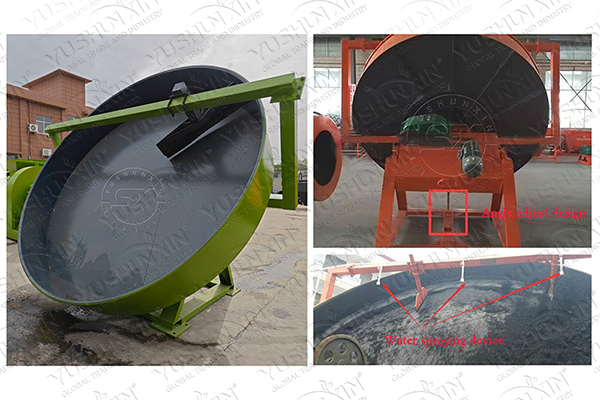
To enhance fertilizer functionality, many producers add beneficial microbial agents during the granulation stage. A practical approach is installing a spray system above the disc granulator.

This spraying device evenly applies liquid microbial inoculants, bio-enzymes, or nutrient solutions onto rolling pellets. Compared with dry mixing, spraying offers better distribution and adhesion, while avoiding excessive moisture accumulation.

Proper control of spray volume is critical. Excess liquid may cause pellet deformation, while insufficient spraying can lead to uneven microbial content. When correctly adjusted, this method helps produce biofertilizer pellets with active microorganisms and stable structure. Learn more!
Key Operating Factors to Watch

For stable disc granulation of cow manure fertilizer, operators should pay attention to:

Raw material moisture (usually 25–35%)

Disc inclination angle and rotation speed

Uniform feeding rate

Spray system consistency

Fine-tuning these parameters improves pellet roundness, strength, and yield.

Final Notes

Using a disc granulator for cow manure biofertilizer pellet production combines simplicity with flexibility. With the addition of a spraying system for microbial agents, producers can further enhance product value without complicating the process.

For those planning a cow manure biofertilizer project, understanding disc granulation principles and equipment configuration is a key step toward stable and scalable production. If you want to know more, welcome to visit: https://www.biofertilizerproduction.com/product/disc-pelletizer-for-biofertilizer-making/
Как выбрать подходящую линию гранулирования NPK? — Руководство по выбору и практические советы

В современной аграрной и производственной индустрии линия гранулирования NPK — ключевое оборудование для эффективного производства комплексных удобрений. С развитием технологий на рынке появляется всё больше брендов и моделей линий гранулирования. Как выбрать оборудование, подходящее именно для ваших нужд — актуальный вопрос для многих предприятий и фермеров. В этой статье мы расскажем, на что стоит обратить внимание при выборе линии гранулирования NPK и дадим практические рекомендации.

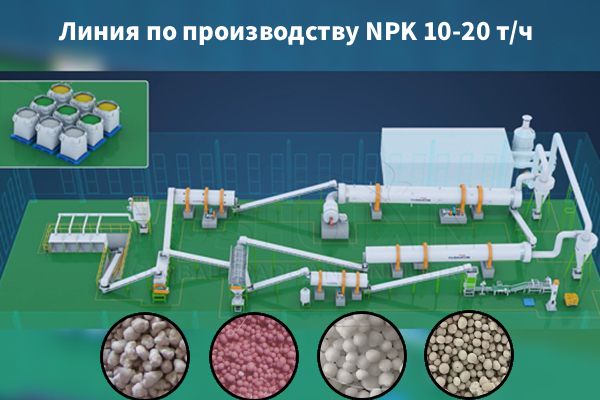
Линия-по-производство-NPK-10-20-т-ч

1. Определите собственные производственные потребности

Требования к производительности
В первую очередь, необходимо исходить из собственных потребностей в производительности (годовой, месячный или суточный объём производства) при выборе подходящей линии. Для небольших хозяйств подойдут малые или средние линии, а для крупных фабрик — оборудование с большей производительностью.

Гибкость рецептуры
Для разных культур и почв нужны разные пропорции NPK. При выборе линии учитывайте, поддерживает ли оборудование различные рецептуры и можно ли гибко изменять соотношение сырья.

2. Обратите внимание на технологию и особенности оборудования

Тип гранулирования
Существуют барабанное, дисковое и шнековое (экструзионное) гранулирование. Разные технологии подходят для разных видов сырья и формы гранул. Например, барабанное гранулирование удобно для крупного производства и получения округлых гранул; дисковое — удобно для регулировки размера гранул; экструзионное — для специальных составов.

Уровень автоматизации
Современные линии оснащаются автоматизированными системами управления: автоматическое дозирование, контроль температуры, влажности, сигнализация неисправностей и т.п. Это существенно увеличивает эффективность и снижает вероятность ошибок.

3. Оцените качество оборудования и сервис производителя

Материалы и сборка
Качественная нержавеющая или углеродистая сталь обеспечивают устойчивость к коррозии и износу, а следовательно — долгий срок службы. Важно, чтобы оборудование было удобно в обслуживании.

Надёжность производителя и поддержка
Выбирайте проверенного и надёжного производителя, чтобы быть уверенными в качестве и получить необходимую техническую поддержку. Многие производители предоставляют услуги монтажа, пуско-наладки, обучения персонала и поставки запчастей.

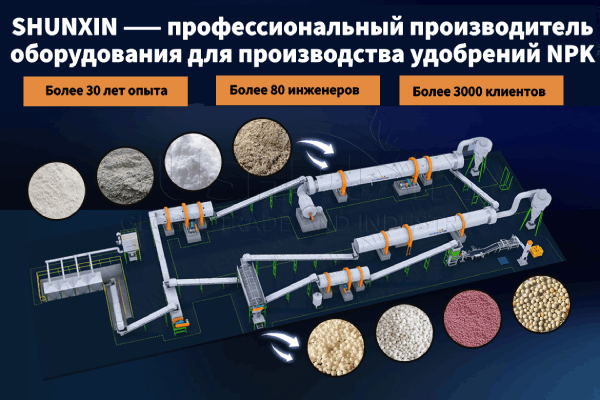
оборудования-для-производства-удобрений-npk

4. Экономическая эффективность и окупаемость

Бюджет на инвестицию
Исходя из финансовых возможностей, определите разумный бюджет, учитывая не только цену оборудования, но и последующие расходы на эксплуатацию — энергию, обслуживание, персонал и т.д.

Энергоэффективность и экологичность
Энергоэффективные и экологичные линии помогают снизить затраты и соответствовать современным требованиям по охране окружающей среды.

5. Посещение производства и тестирование

Если есть возможность, рекомендуем посетить завод-изготовитель, увидеть оборудование в работе и даже провести тестовую грануляцию вашего сырья для оценки качества готового продукта.


Выбор подходящей линии гранулирования NPK напрямую влияет на качество продукции, производительность и долгосрочное развитие предприятия. Рекомендуем взвешенно подходить к выбору, учитывая производительность, технологию, материалы, сервис, экономичность и другие параметры. Если у вас есть конкретные вопросы или нужна помощь с выбором — оставляйте комментарии, мы всегда готовы помочь и дать профессиональную консультацию! Для получения более подробной информации, пожалуйста, посетите:https://www.sxmashina.com/liniya-po-proizvodstvo-npk-udobreniy/

Продается полный комплект оборудования для гранулирования органических удобрений 10 т/ч — ваш надежный помощник в эффективном производстве и развитии зеленого сельского хозяйства

С развитием зеленого и экологического сельского хозяйства в стране спрос на органические удобрения ежегодно растёт. Органические удобрения не только улучшают структуру почвы, но и повышают урожай и качество сельскохозяйственных культур, что становится неотъемлемой частью будущего агропромышленного комплекса. Если вы ищете эффективное, надёжное и автоматизированное оборудование для производства органических удобрений, мы рекомендуем — полный комплект оборудования для гранулирования органических удобрений с производительностью 10 т/ч! Оборудование в наличии, обращайтесь за подробностями!

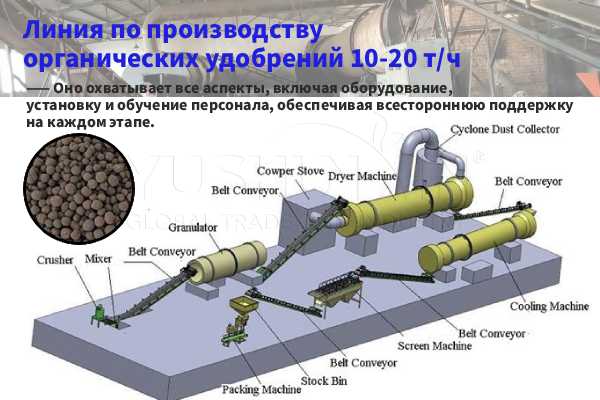
Линия-по-производству-органических-удобрений-10-20-т-ч

1. Описание полного комплекта оборудования для гранулирования органических удобрений 10 т/ч

Данная линия предназначена для производства 10 тонн продукции в час и подходит для профессиональных фабрик по производству органических удобрений, крупных животноводческих комплексов, сельскохозяйственных кооперативов, предприятий по переработке удобрений и др. Линия полностью автоматизирована — от обработки сырья до упаковки готовой продукции, что позволяет значительно сократить затраты на рабочую силу и повысить производственную эффективность.

Основная комплектация оборудования:

  1. Оборудование для ферментации (компостеры/оборудование для переворачивания)
    Обеспечивает полное созревание, дезодорацию и обеззараживание навоза и растительных остатков.
  2. Дробилка
    Измельчает ферментированные материалы до нужной фракции, повышая эффективность гранулирования.
  3. Автоматический дозатор
    Интеллектуально дозирует различные компоненты по рецептуре, обеспечивая точность состава.
  4. Смеситель
    Обеспечивает равномерное смешивание разных компонентов, гарантируя однородность каждой гранулы.
  5. Гранулятор
    Используются дисковые, барабанные или мокрые грануляторы — подбираются индивидуально под состав сырья.
  6. Сушилка
    Быстро снижает влажность гранул для стабильности хранения удобрений.
  7. Охладитель
    Эффективно снижает температуру продукции, предотвращая слипание и образование комков.
  8. Сито
    Отделяет стандартные гранулы от крупных кусочков и пыли, обеспечивая однородный размер продукции.
  9. Оборудование для покрытия гранул (по желанию)
    Повышает гладкость поверхности, увеличивает длительность действия и улучшает внешний вид продукта.
  10. Автоматическая упаковочная машина
    Обеспечивает точную фасовку и повышает эффективность логистики.

2. Преимущества оборудования

  • Высокая производительность: 10 тонн в час, подходит для средних и крупных предприятий;
  • Автоматизация: Умная система управления, упрощённое обслуживание, минимальные трудозатраты;
  • Качественная продукция: Равномерные гранулы, сбалансированный состав, лучшая усваиваемость растениями;
  • Универсальность: Подходит для навоза, соломы, жмыха, городских органических отходов и др.;
  • Экологичность: Система удаления пыли и запаха, соответствие экологическим стандартам;
  • Гарантия и сервис: Прямая поставка от завода, монтаж, обучение, сервисное обслуживание.

3. Сфера применения и рыночные перспективы

  • Переработка навоза на животноводческих фермах;
  • Собственное производство удобрений на эко-фермах и кооперативах;
  • Расширение мощностей на заводах органических и бактериальных удобрений;
  • Государственные проекты в области экологии и агропарки.

С учётом внедрения экологических норм и программ “органические удобрения вместо химических”, рынок качественных линий производства органики растёт, инвестировать выгодно сейчас!


4. Условия покупки и наши гарантии

  • Индивидуальная комплектация: Подбор по типу сырья, производительности и технологии;
  • Выгодная цена: Прямая продажа с завода, без посредников, отличное соотношение цена/качество;
  • Техническая поддержка: Бесплатное проектирование, консультации и обучение персонала;
  • Быстрая доставка: Стандартные модели в наличии, индивидуальные заказы — в кратчайшие сроки;
  • Сервис: Гарантия 1 год, пожизненное обслуживание, быстрый отклик и наличие комплектующих.

Если вас заинтересовал полный комплект оборудования для гранулирования органических удобрений 10 т/ч — свяжитесь с нами для консультации или приезжайте на производство! Мы подберём оптимальное решение под ваши нужды и поможем быстро и эффективно запустить проект.


Полный комплект оборудования для гранулирования органических удобрений: высокая производительность, автоматизация, экологичность — откройте путь к современному и прибыльному сельскому хозяйству! Для получения более подробной информации, пожалуйста, посетите:https://www.liniyaudobreniy.com/liniya-po-proizvodstvu-organicheskikh-udobreniy-10-20-t-ch/

How Does Biochar Production from Chicken Manure Support Sustainable Agriculture?

Biochar production from chicken manure creates a practical route for chicken waste management and carbon-based fertilizer manufacturing. This approach connects bird manure/dung collection with a controlled carbonization process, and it then links powdered biochar preparation with pellet making or granulation into stable granules. Therefore, many fertilizer plants treat chicken manure biochar as a value-added material that supports soil improvement goals while also strengthening a consistent fertilizer production procedure. Moreover, the chicken manure processing process allows producers to reduce odor, lower moisture, and improve storage and transportation by converting loose powdery materials into pellets, particles, or uniform granules.

What raw materials support chicken manure carbon-based fertilizer production and stable granulation quality?

A reliable carbon-based fertilizer production line usually starts with suitable raw materials, because different feedstocks create different carbon content, ash level, and granulating behavior. Chicken manure, bird manure, and poultry dung often act as the core material, while several blended inputs support powder conditioning and pelletizing performance. Typical options include dried chicken manure powder, composted chicken dung, and partially fermented bird manure, because these forms reduce excessive moisture and improve crushing and grinding efficiency. In addition, crop residues such as rice husk, peanut shell, corn stalk powder, and sawdust powder can adjust the carbon-to-nitrogen ratio and support more stable biochar production.

Furthermore, mineral and nutrient additives often strengthen carbon-based fertilizer granulation. Many producers select bentonite powder as a binder, humic acid powder for carbon-based fertilizer enrichment, and rock phosphate powder to increase phosphorus content. Some facilities also choose biochar powder made from straw, bamboo, or wood chips to stabilize the chicken manure biochar formulation. As a result, a practical raw material classification usually includes poultry manure materials, biomass carbon sources, and functional powdered additives, and each category supports smoother granulation, better pellet durability, and more consistent pellet making results.

Chicken manure composting equipment for sale

How does the chicken manure carbonization and powder preparation process improve carbon-based fertilizer manufacturing?

The chicken manure biochar process typically uses a clear preparation sequence, because each step affects particle size, moisture level, and final pellet strength. A controlled composting or pre-fermentation stage often comes first, and that stage reduces pathogens and helps the chicken manure processing procedure reach a more stable condition. Next, a drying step often reduces moisture so that carbonization equipment can run steadily. After drying, carbonization equipment such as a carbonization furnace converts chicken dung into biochar under limited oxygen, and that conversion creates a porous carbon structure that fits carbon-based fertilizer goals.

After carbonization, a crushing machine or carbon fertilizer grinder machine for sale usually reduces char to biochar powder. A screened powdery output supports more consistent mixing, because uneven lumps can weaken pellet making and create irregular pellets or particles. Then a mixer combines chicken manure biochar powder with binders and nutrient powders, and a controlled moisture adjustment step supports granulating stability. Therefore, the production procedure usually follows composting or conditioning, drying, carbonization, crushing, screening, and mixing, and this sequence creates a predictable powdered feed that supports later granulation and pelletizing.

Which granulation machines and finishing equipment support chicken manure biochar pelletizing and efficient production?

Granulation equipment determines how powdered chicken manure biochar turns into marketable granules, pellets, or particles, so machine selection affects output form, hardness, and operating cost. Many factories choose a disc granulator for char-based fertilizer when operators need flexible pellet diameter adjustment and stable ball making for mixed powders. Some plants choose a double roller extrusion granulator when the formula shows low viscosity, because extrusion granulation can form dense pellets without heavy reliance on liquid binders. Other facilities prefer a drum granulator when the production target requires higher throughput and continuous granulating performance.

granulator machine

In addition, a drying machine and a cooling section often stabilize newly formed granules, because wet pellets can deform during storage. A screening machine can separate qualified granules from oversized particles and fine powder, and returned powder can re-enter the granulating loop to raise material utilization. Finally, packing equipment supports clean bagging and easier transportation of carbon-based fertilizer pellets. As a result, a complete pelletizing and pellet making process often includes a granulator or pelletizer, followed by drying, cooling, screening, and packing machinery, and this equipment chain supports consistent manufacturing quality for chicken manure biochar fertilizer products.

Conclusion

Chicken manure biochar production supports sustainable agriculture because the process converts bird manure/dung into a stable carbon material and then upgrades that carbon into granules or pellets suitable for storage, transport, and field application. The overall procedure also strengthens standardization, because carbonization, crushing into powder, and controlled granulation allow predictable particle size and product handling. Moreover, blended raw materials such as chicken manure powder, biomass powders, and binder powders can fit different pellet making requirements and granulating conditions. A professional fertilizer equipment manufacturer- Yushunxin can provide integrated machinery solutions for carbonization, grinding, granulation, drying, and packing within a practical chicken manure carbon-based fertilizer production line. You can visit: https://www.charbasedfertilizermachine.com/product/chicken-dung-and-biochar-as-fertilizer/

How to Choose a Biofertilizer Production Line Based on Your Investment Budget

For many new investors and small fertilizer manufacturers, the biggest question is not whether to enter the biofertilizer market, but how much to invest. Selecting a suitable biofertilizer production line largely depends on budget, target capacity, and raw material type.

This guide explains how different budget levels—around USD 50,000, USD 100,000, and USD 200,000—typically correspond to different configurations of organic biofertilizer manufacturing systems.


Entry-Level Solutions: Around USD 50,000

With a budget close to USD 50,000, most producers focus on a small-scale biofertilizer production setup. These lines usually emphasize basic composting and simple granulation.

A typical configuration may include a compost turner for windrow or trench composting, a basic crusher, a simple mixer, and a compact pelletizing machine such as a disc or roller granulator. Drying and cooling are often simplified or partially manual.

This type of low-cost biofertilizer manufacturing line is suitable for local markets, pilot projects, or farms processing livestock manure into organic fertilizer pellets.


Mid-Range Investment: Around USD 100,000

At the USD 100,000 level, producers can build a more complete organic fertilizer production line with improved automation and product consistency.

A mid-range biofertilizer processing plant typically includes controlled composting equipment, automatic feeding systems, improved granulation units, rotary dryers, and screening machines. Dust collection and odor control equipment may also be added.

This budget allows higher output, more stable granule quality, and better adaptability to different raw materials such as poultry manure, crop residues, or mixed organic waste.


Advanced Configuration: Around USD 200,000

With an investment of approximately USD 200,000, producers can establish a semi-automatic or fully integrated biofertilizer production system.

Such lines often include automated compost fermentation systems, high-efficiency granulators, rotary drum dryers, coolers, coating machines, and automated packing systems. This level of biofertilizer manufacturing plant is suitable for commercial-scale operations supplying regional or export markets.

The higher budget improves labor efficiency, production stability, and product uniformity while reducing long-term operating costs. If you want to make biofertilizer within budget, you can consult YUSHUXIN.


Key Factors Beyond Budget

While budget is critical, other factors also influence biofertilizer production line selection, including raw material moisture, desired fertilizer form (powder or granule), available land area, and labor costs.

Choosing the right biofertilizer manufacturing equipment is about balancing initial investment with long-term operational goals. Learn more!


By understanding how different investment levels translate into different biofertilizer production solutions, producers can make informed decisions without overinvesting or limiting future growth. A budget-aligned production line is often the most practical starting point for success in the organic fertilizer industry. If you need a business plan, welcome to visit: https://www.biofertilizerproduction.com/bio-fertilizer-making-line-cost/

Как приобрести оборудование для линии производства удобрений? Подробный разбор процесса закупки и важных моментов

В современном развитии сельского хозяйства модернизация и закупка оборудования для линии производства удобрений становятся особенно важными. Рациональный выбор и приобретение эффективного, стабильного оборудования для производства удобрений не только повышает производительность, но и гарантирует качество удобрений, снижая эксплуатационные расходы. Так как же приобрести оборудование для линии производства удобрений? На что нужно обратить внимание в процессе закупки? В этой статье вы найдете подробные ответы.

1. Определите производственные потребности

Перед покупкой сначала необходимо четко определить собственные производственные потребности:

  • Тип удобрения: органические удобрения, комплексные удобрения, биологические удобрения и т.д. — для каждого типа нужны разные требования к оборудованию.
  • Объем производства: выбирайте подходящие линии исходя из годового или суточного объема производства.
  • Источник сырья: различные виды сырья (например, навоз, солома, химические компоненты и др.) влияют на комплектацию оборудования.
  • Степень автоматизации: требуется ли ручное управление или автоматизация/интеллектуализация.

2. Ознакомьтесь с составом оборудования

Полная линия по производству удобрений обычно включает в себя следующие основные устройства:

  1. Оборудование для дробления сырья
  2. Оборудование для смешивания
  3. Грануляторы
  4. Оборудование для сушки и охлаждения
  5. Оборудование для просеивания
  6. Упаковочное оборудование
    При необходимости можно добавить ферментационные установки, оборудование для удаления пыли и другие вспомогательные устройства.
Процесс-сухой-грануляции-NPK

3. Выбирайте надежного поставщика

Очень важно выбирать поставщика с опытом и соответствующей квалификацией:

  • Квалификация компании: проверьте наличие лицензии, сертификатов.
  • Опыт производства: изучите репутацию и реализованные проекты компании в сфере оборудования для удобрений.
  • Технический потенциал: наличие собственных разработок, возможность индивидуальных решений.
  • Сервисное обслуживание: предоставляют ли монтаж, обучение персонала, гарантию и ремонт.

4. Изучите характеристики и качество оборудования

  • Материалы и технологии: устойчивость к коррозии, качество изготовления.
  • Энергоэффективность: отдавайте предпочтение оборудованию с низким энергопотреблением и минимальным загрязнением.
  • Удобство эксплуатации: рациональная конструкция, простота в управлении и обслуживании.
  • Стабильность работы: низкий уровень отказов, возможность длительной бесперебойной работы.

5. Сравнивайте цены и комплектации

  • Стоимость оборудования: соотнесите стоимость с выделенным бюджетом, сравните предложения от разных производителей, не гнались за самой низкой ценой.
  • Комплектация: предложения от разных производителей могут различаться, важно оценивать общее соотношение цены и качества.
  • Доставка и монтаж: уточните расходы и условия доставки, монтажа и дальнейшего обслуживания.

6. Заключайте официальный договор

В договоре обязательно должны быть четко прописаны модели, параметры, количество, цена, сроки поставки, стандарты качества, условия сервисного обслуживания и т.д., чтобы защитить интересы обеих сторон.

Закупка оборудования для линии производства удобрений — это системный процесс, от которого зависит будущая производительность и экономическая эффективность предприятия. Необходимо выбирать оборудование и партнера, исходя из реальных потребностей, чтобы добиться наилучших результатов. Надеемся, что эта статья поможет вам в принятии решений по закупке оборудования.


Если вы хотите узнать больше о подборе, комплектации и стоимости оборудования для линии производства удобрений — свяжитесь с нами для получения профессиональной консультации! Для получения более подробной информации, пожалуйста, посетите:

What Makes Disc Granulation the Preferred Method in Mineral Fertilizer Production?

Mineral fertilizer manufacturing relies on advanced granulation processes to convert fine mineral powders into uniform, durable, and easily handled granules. The use of rock-based raw materials such as phosphate ore, potash, dolomite, limestone, and gypsum requires precise control over particle size, moisture, and density. Among all existing granulating methods, the disc granulation process stands out for its high efficiency, flexible operation, and adaptability to various mineral fertilizer formulations. The following analysis explores why this method achieves such wide acceptance in modern mineral fertilizer production and how industries benefit from it.


Raw Materials in Mineral Fertilizer Production: How Do Different Minerals Support Industrial Needs?

Mineral fertilizers use a broad range of mined raw materials, and each mineral brings distinct value to the final product. For instance, rock phosphate serves as a primary phosphorus source in phosphate fertilizer production, while potash ore contributes potassium for NPK formulations. Dolomite and limestone supply calcium and magnesium, improving soil conditioning and neutralizing acidity in certain industrial fertilizer compositions. Gypsum and sulfur minerals support sulfur-based fertilizer preparations that cater to specific nutrient demands in high-value crops or industrial soil restoration projects.

Chemical, mining, and environmental industries rely on these mineral resources not only for agricultural purposes but also for waste management and mineral recycling programs. For example, mine waste management projects often use mineral granulation technologies to stabilize waste particles and reduce environmental risks. Therefore, raw material diversity demands a flexible and reliable granulation process that can handle different densities, moisture levels, and mineral hardness levels.

Disc Pelletizer for Mineral Fertilizer Production

Why Do Manufacturers Prefer Disc Granulators for Mineral Fertilizer Granulation?

In mineral fertilizer manufacturing, disc granulators—also known as pan pelletizers or pan granulators—offer superior control over granule size and shape. This equipment allows the operator to adjust the disc angle, rotational speed, and moisture addition, resulting in consistent particle formation. When dealing with minerals such as phosphate rock or potash ore, granule uniformity plays a critical role in product strength and storage stability.

The open structure of the disc granulation machine simplifies monitoring and adjustment during operation, reducing waste and improving yield. Compared with drum granulation or spray granulating methods, the disc granulation process uses a simpler design, requires less energy, and minimizes coating material losses. Moreover, the disc granulator’s ability to handle fine mineral powders without extensive pre-treatment enhances production efficiency in large-scale fertilizer manufacturing lines. The granulation process also supports continuous operation, which benefits mineral-based fertilizer producers seeking stable throughput.


What Equipment Supports the Complete Mineral Fertilizer Granulation Process?

A complete mineral fertilizer production system usually includes several types of machinery to ensure efficient processing. Before granulation, a jaw rock crusher or ore fertilizer crusher machine breaks down large mineral chunks into fine powders suitable for pelletizing. In some production plans, a Raymond mill offers precise grinding for limestone or dolomite powder preparation. After granulation, a rotary screening machine or vibrating screen separates qualified granules from oversized or undersized particles, which return to the disc granulator for further processing.

These integrated systems form the foundation of various industrial fertilizer production schemes, such as limestone fertilizer production solutions, rock phosphate fertilizer production, and mineral organic fertilizer production lines. Each process benefits from the flexibility and efficiency of disc granulation, which adapts easily to changes in raw mineral composition.


Conclusion

Disc granulation provides stable, low-cost, and controllable granule formation for industries that depend on mineral-based fertilizers. Its design meets the demands of rock, ore, and mineral powder processing, ensuring consistent particle size and improved product performance. When combined with auxiliary equipment such as crushing machines, screening units, and drying systems, the disc granulation line forms a compact and efficient mineral fertilizer manufacturing solution.

For manufacturers seeking reliable production technology and durable machinery, a professional fertilizer equipment manufacturer—Yushunxin—offers advanced disc granulators, complete mineral fertilizer production lines, and customized engineering support. By adopting such technology, enterprises strengthen their competitiveness in the continuously evolving mineral fertilizer industry. You can visit: https://www.mineralfertilizerproductionsolutions.com/product/disc-granulator-machine/

Essential Equipment for Making Fish Amino Acid Liquid Fertilizer (Fish Hydrolysate Production Line Guide)

Fish amino acid (FAA) has become a popular input in organic farming due to its rich nitrogen content and excellent plant-boosting properties. For manufacturers looking to set up a fish amino acid liquid fertilizer production line, choosing the right equipment is crucial for efficiency, product quality, and cost control. Below is an overview of the essential machines used in a modern fish hydrolysate plant, along with alternative names and commonly searched keywords to maximize visibility.

1. Crushing and Pre-Processing Equipment

Whole fish waste, trimmings, or by-products must be reduced to smaller particles before enzymatic hydrolysis.
Common equipment includes:

  • Fish waste crusher / organic material grinder / wet material pulverizer
  • Bone-breaking mill for viscous feedstock

These machines help create a uniform slurry that improves enzyme contact and fermentation efficiency, which is essential in liquid fertilizer processing.

2. Enzymatic Fermentation Tank

A stainless-steel fermentation tank—also called a liquid fertilizer fermenter, enzymatic digester, or biofermentation reactor—is the core equipment for producing high-quality fish amino acid fertilizer.
Key features to look for:

  • Temperature control for stable hydrolysis
  • Agitator for consistent mixing
  • Anti-corrosion inner walls
  • Ports for enzymes and nutrient additives

A good fermentation system significantly impacts the nitrogen level, smell reduction, and stability of your fish protein liquid fertilizer.

3. Mixing and Homogenizing System

After fermentation, the product still needs proper blending to achieve a uniform liquid. Equipment options include:

  • Liquid mixer / high-shear mixer / agitator tank
  • Inline homogenizer for consistent viscosity
    These machines help dissolve molasses, amino acids, or stabilizers added during the conditioning stage.

4. Solid–Liquid Separation (If Required)

Some producers prefer clearer FAA products. For that purpose, a dewatering machine can be used:

  • Screw press separator
  • Filter press or fine mesh screen

These solutions enhance clarity and remove coarse residues, improving the product’s storage performance.

5. Storage and Maturation Tanks

Fish amino acid usually requires a short aging period, so storage tanks—also known as buffer vessels—are essential.
Key functions:

  • pH stabilization
  • Odor reduction
  • Sediment control

HDPE or stainless-steel tanks are both commonly used in liquid organic fertilizer plants.

6. Filling and Packaging Unit

For commercial sales, an efficient liquid fertilizer filling machine is needed.
Options include:

  • Semi-automatic liquid fillers (small budget)
  • Fully automatic bottle filling lines (large-scale production)

These machines handle bottling, capping, and labeling to streamline final packaging.

Choosing the right fish amino acid fertilizer equipment not only increases productivity but also ensures a stable, market-ready product with high nutrient value. If you want, welcome to visit: https://www.liquidfertilizerplants.com/products/fish-protein-liquid-fertilizer-manufacturing/

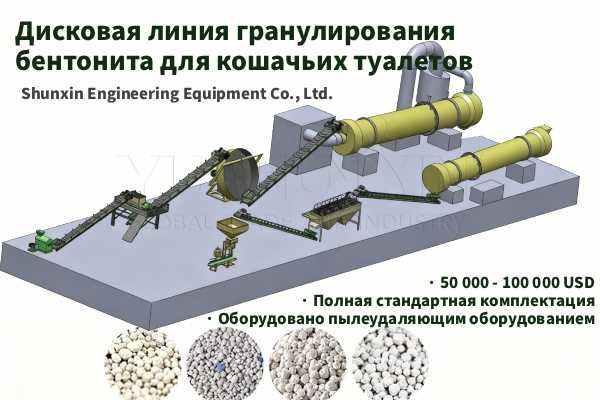
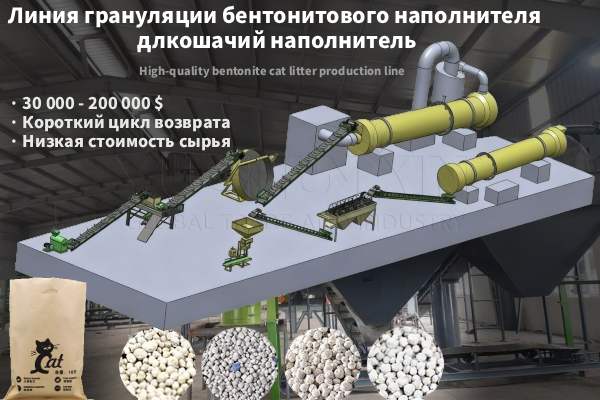
Линия по гранулированию бентонитового наполнителя для кошачьих туалетов — двойная выгода для здоровья питомцев и экологичного производства

В последние годы, с ростом уровня жизни, рынок товаров для домашних животных активно развивается, а спрос на наполнитель для кошачьих туалетов стремительно увеличивается. Бентонитовый наполнитель благодаря отличной впитывающей способности, устранению запаха и образованию комков стал первым выбором многих владельцев кошек. Задумывались ли вы, как эти, казалось бы, обычные гранулы производятся массово, эффективно и безопасно? Ответ кроется в современной линии по гранулированию бентонитового наполнителя.

Дисковая-линия-гранулирования-бентонитовый-наполнитель-для-кошачьего-туалета

1. Преимущества бентонитового наполнителя

Бентонит — это натуральный глинистый минерал, который после специальной обработки обладает:

  • Отличной впитывающей способностью, быстро удерживает жидкость и предотвращает распространение запаха.
  • Превосходным комкующим эффектом, что облегчает уборку.
  • Натуральным и безопасным составом, снижая риски для здоровья кошек.

2. Технологический процесс линии по гранулированию бентонитового наполнителя

1. Предварительная обработка сырья
Выбранный качественный бентонит дробится до мелкой пыли, затем просеивается для удаления примесей и крупных частиц, что обеспечивает качество дальнейшей грануляции.

2. Смешивание и увлажнение
Порошкообразный бентонит смешивается с необходимым количеством воды в смесителе до достижения оптимальной влажности для образования гранул.

3. Гранулирование
Увлажнённый бентонит поступает в гранулятор (например, дисковый или барабанный), где под действием вращения формируются равномерные гранулы.

4. Сушка и охлаждение
Свежие гранулы содержат много влаги, поэтому их сушат в сушильных установках, а затем охлаждают, чтобы избежать слипания.

5. Просеивание и возврат
Готовые гранулы проходят через вибросито для отделения слишком больших или мелких частиц. Стандартные гранулы направляются на упаковку, остальные возвращаются на повторную переработку.

6. Автоматическая фасовка
Финальный наполнитель автоматически взвешивается, расфасовывается и герметично упаковывается, что обеспечивает чистоту и удобство хранения и транспортировки.

Bentonite-cat-litter-production-line

3. Автоматизация и экологичность

Современные линии по гранулированию оснащены системой автоматического управления PLC, что позволяет интеллектуально контролировать процесс производства и минимизировать ошибки и затраты на рабочую силу. Установлены системы очистки воздуха и фильтрации для защиты окружающей среды и здоровья сотрудников, поддерживая идею устойчивого развития.

4. Почему стоит выбрать профессионального производителя оборудования?

  • Отработанные технологии: Богатый опыт в отрасли гарантирует стабильное качество продукции.
  • Энергоэффективность и высокая производительность: Оборудование с низким потреблением энергии и высокой производительностью помогает снизить издержки.
  • Индивидуальный подход: Возможность проектирования линии исходя из потребностей клиента.
  • Полный сервис: Пусконаладка, обучение персонала, техническое обслуживание и поддержка.

Линия по гранулированию бентонитового наполнителя не только обеспечивает комфорт и чистоту в домах любителей кошек, но и способствует экологичному развитию индустрии товаров для животных. Эффективное и экологичное оборудование — залог успешного развития предприятия. Приглашаем к сотрудничеству всех заинтересованных! Свяжитесь с нами для получения подробных схем, консультаций и организации визита на производство. Более подробную информацию можно найти на сайте:https://www.sxmashina.com/proizvodstvo-bentonitovykh-napolniteley-dlya-koshachikh-tualetov/

Key Machinery for Building an Efficient Biofertilizer Production Line

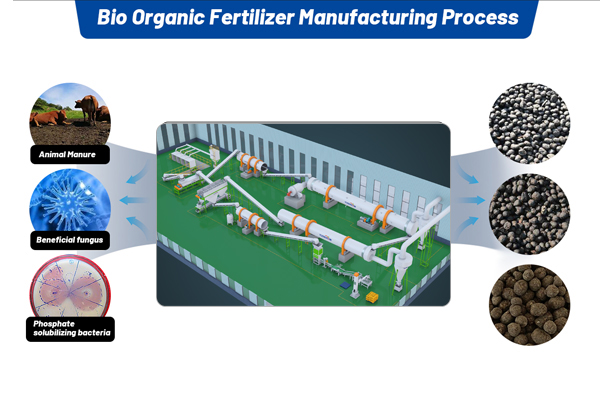
Selecting the right biofertilizer production equipment is essential for anyone planning to establish a reliable and efficient organic fertilizer manufacturing plant. Because biofertilizer is produced through multiple steps—composting, crushing, mixing, fermentation, granulation, drying, and packaging—the performance of each machine directly affects the final nutrient content and stability of the product. This guide introduces the core equipment categories used in a modern biofertilizer production line and explains how to choose machinery that matches your raw materials and production scale.

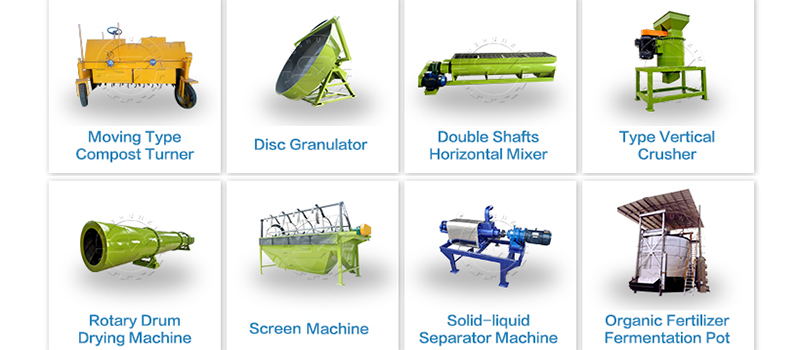
  1. Composting and Fermentation Systems

The heart of any organic fertilizer production facility is the composting stage. Depending on the volume and moisture level of raw materials like livestock manure, crop residues, sludge, or food waste, manufacturers typically choose among:

Aerobic compost turners (windrow turners, groove-type compost turners)

In-vessel fermentation tanks for controlled, enclosed composting

Horizontal or vertical bio-fermentation reactors for rapid decomposition

These machines ensure proper aeration, temperature rise, and pathogen elimination. For small to medium plants, a groove-type compost turning machine offers good cost-performance, while larger facilities may prefer an automated in-vessel composting system to save labor.

  1. Crushing, Mixing, and Pre-Processing Equipment

Before granulation, materials must be uniform. A fertilizer crusher—such as a semi-wet material crusher or chain crusher—helps break down clumps for better mixing. High-moisture raw materials benefit from a semi-wet crusher that prevents clogging.

A horizontal mixer, double-shaft blender, or vertical mixer then combines additives like humic acid, beneficial microbes, or NPK supplements to achieve a balanced formula. Consistent mixing improves nutrient distribution throughout the final biofertilizer product.

  1. Granulation Machines for Shaping the Product

If pelletized biofertilizer is required, several biofertilizer granulation machines are available:

Disc (pan) granulators for flexible capacity

Drum granulators for continuous, large-scale pelleting

Flat die and ring die granulators for uniform organic pellets

Double roller press granulators for low-moisture powder-to-granule processing

Each type caters to different raw material moisture levels and finishing requirements.

  1. Drying, Cooling, Screening, and Packaging

To increase storage stability, granules often pass through a rotary dryer and cooler. A screening machine removes oversized or undersized particles to ensure consistent quality.

The final step uses automatic or semi-automatic packing machines for accurate bagging, improving efficiency and reducing labor cost.

YUSHUNXIN can provide you with bio-fertilizer production equipment of various specifications. Welcome to inquire!

Final Thoughts

Choosing suitable organic biofertilizer machinery greatly influences operating cost, product quality, and long-term profitability. When equipment matches your raw materials, moisture level, and capacity goals, you can build a high-efficiency, low-maintenance biofertilizer production plant that consistently delivers premium products. If you want to know about these machine, welcome to visit: https://www.biofertilizerproduction.com/faq-items/what-is-the-necessary-equipment-for-biofertilizer-production/