
A root vegetable processor needs to match roller length, brush hardness, water spray, and residence time to the raw material instead of selecting one configuration for every crop. Potatoes, carrots, ginger, sweet potatoes, cassava, yam, and taro create different cleaning and peeling demands because each crop has a different shape, skin strength, soil load, and acceptable product loss. A continuous root vegetable washing and peeling machine with adjustable brush rollers gives food factories a practical way to combine mud removal, polishing, light peeling, and continuous product transfer in one food processing procedure. The correct configuration also supports downstream slicing, dicing, blanching, frying, freezing, drying, or packaging.
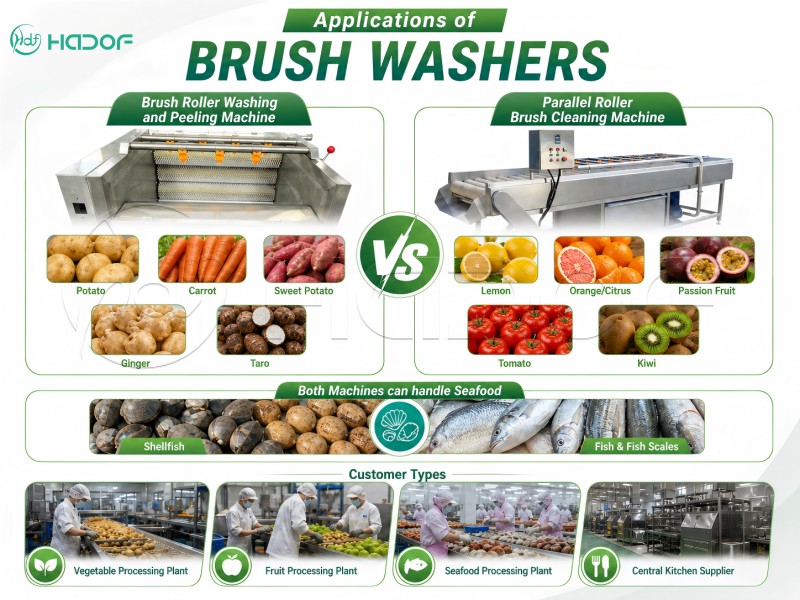
How Does Roller Brush Vegetable Peeler Roller Length Affect Continuous Root Vegetable Washing And Peeling?
Roller length influences both treatment time and practical food production capacity. The current Hadof product page lists 800, 1,000, 1,500, and 2,000 mm standard roller lengths, with standard processing capacities from approximately 700 to 2,000 kg/h. Small and medium vegetable workshops commonly use shorter machines, while larger continuous food manufacturing projects use longer rollers for higher throughput and longer surface contact. The current product data therefore differs from the older search phrase “roller brush vegetable peeler 600 to 1800 mm roller length,” so equipment selection should follow the current model table rather than that older numerical range. An industrial brush peeler with 800 to 2,000 mm roller options lets a project team match output, workshop length, and cleaning intensity more accurately.
Material geometry also changes the required roller length. Long or irregular ginger roots need enough space to turn and expose recessed surfaces, while round potatoes move more predictably across rotating brushes. Hadof notes that larger models support continuous high-capacity root vegetable preparation, and the company recommends extra capacity margin for irregular, high-fiber crops such as ginger when crowding could reduce cleaning contact.
Which Soft Brush And Hard Brush Options Fit Potatoes, Carrots, Ginger, And Cassava?
Brush hardness determines how aggressively the machine treats the vegetable surface. Soft brushes focus on washing and polishing, so fresh carrots, new potatoes, and produce that needs attractive retail appearance often benefit from gentler contact. Hard brushes create stronger friction and suit crops that need more skin removal before further food preparation. Spiral scraper blades can add a stronger peeling action for continuous industrial projects that need deeper treatment and faster forward movement. The product page also identifies PBT or PA66 as possible brush-filament materials for relevant configurations.
A soft and hard brush peeling system for potatoes and carrots can therefore support factories that process more than one crop on the same food processing equipment. Ginger processors may use gentler settings when the factory wants to retain more flesh around irregular knobs, while potato processors can increase friction when the food manufacturing process requires stronger peeling. The broader category of root vegetables used in commercial food processing includes crops with very different surface structures, so a factory gains more flexibility when the machine allows brush selection instead of forcing every material through one fixed treatment.
How Should A Continuous Spray Washing System Work With Brush Peeling?
Water spray performs a different task from the brushes. Rotating brushes loosen mud, surface residue, and peel, while clean water carries loosened material away from the contact zone. The related Hadof process guide explains that brush roller washing uses multiple rotating brushes together with clean water spray and that operators can adjust brush hardness, spray water, and process intensity according to the vegetable. The same guide explains that high-pressure spray washing can remove mud before peeling or remove peel fragments and starch after peeling.
A food factory therefore gains better control when it treats spray design as part of the full food treatment system. Heavy-soil potatoes may need soaking before brush cleaning, while ginger may need longer brush contact and carefully directed spray around recessed surfaces. A multi-stage root vegetable washing and cleaning process can combine soaking, bubbling, brush scrubbing, spray rinsing, inspection, cutting, and secondary washing. That sequence reduces the load on one machine and helps the food production system manage soil, peel waste, starch, and wastewater in separate stages.
What SUS304 Brush Peeling Machine Capacity Fits A Food Processing Plant?
A food processing plant should match machine capacity to real hourly feed instead of maximum theoretical output alone. A factory that runs several hours continuously needs enough roller area to prevent crowding, while a central kitchen with intermittent batches can use a smaller footprint. The Hadof page lists approximately 700–2,000 kg/h across the standard brush peeler range, and the related process page places brush roller washing within broader root vegetable lines that can also include soaking, high-pressure washing, inspection, cutting, and further treatment.
A SUS304 roller brush washer peeler for food factories can suit wet food preparation environments when the selected configuration uses SUS304 food-contact construction. The related process page states that SUS304 food-contact components support wet processing and daily sanitation. A processor should also consider feed consistency, soil level, peeling depth, downstream cutting capacity, and food waste management because the brush machine cannot operate efficiently when another stage limits the complete line.
How Do Brush Peeling Machine Quotation Requirements Affect Line Integration And Investment Planning?
A useful equipment quotation needs more than an hourly capacity number. The project team needs to define raw material, skin condition, average product size, soil load, target peeling depth, daily working time, workshop dimensions, water conditions, power supply, and downstream process. Those details determine whether the factory needs one brush washer, two brush stages, a centrifugal peeler, spiral scraper blades, or a wider root vegetable cleaning line. Hadof describes separate solutions for small workshops, medium continuous operations, and industrial projects, and the company connects larger brush machines with elevators, sorting belts, and packaging machinery.
This planning method helps food factories compare equipment investment through production needs instead of focusing only on one machine. A potato chips plant may place cutting and starch washing after peeling, while a frozen carrot line may add blanching and quick freezing. A ginger powder plant may prioritize soil removal, controlled peeling, slicing, and drying. Hadof produce-processing system engineering covers washing, peeling, cutting, pretreatment, drying, freezing, frying, and auxiliary food processing machinery, which allows buyers to evaluate the brush peeler as one part of a complete food manufacturing process.
Which Continuous Root Vegetable Washing And Peeling Machine Configuration Fits The Final Product?
The final product should determine the brush peeler configuration. A retail carrot processor may favor soft brushes and controlled spray because appearance and product yield matter more than deep skin removal. A potato snack factory may require stronger brushing or scraper-assisted peeling because the next food preparation stages include cutting, washing, blanching, and frying. A ginger processor may need additional roller length and more careful spray management because irregular surfaces trap soil. Cassava and sweet potato projects may require harder treatment when thicker skin creates greater peeling resistance.
The strongest configuration therefore combines the right roller length, brush hardness, spray arrangement, and line speed around the actual raw material and food production objective. Factories that need more model information can learn more about available brush peeler configurations before matching the machine to upstream washing and downstream cutting, drying, freezing, or frying machinery.
If you have interests in continuous root vegetable washing and peeling equipment, you can learn more about:
https://www.hadofps.com/products/brush-peeling-machine/